A chaise lounge sofa combines everyday seating with an extended section where you can stretch out your legs. It offers a place to read, watch television, or relax without pulling a separate footstool into the room. The challenge is choosing one that feels comfortable without making the surrounding space difficult to use.
There is more to consider than color or style. Overall size, chaise position, seat depth, cushioning, upholstery, and construction all affect how well the sofa works in your home. A generous chaise may feel inviting in a showroom but block a useful walkway once you bring it home.
Start by thinking about who will use the sofa and what happens around it during an ordinary day. The right choice should support your preferred sitting position, provide enough seating, and leave room to move comfortably between furniture.
What Makes a Chaise Lounge Sofa Different?
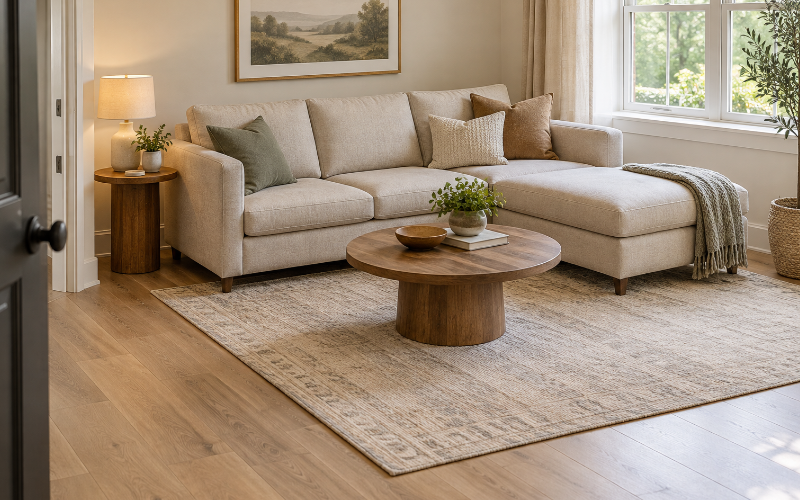
A chaise lounge sofa has a longer seating section that supports your legs while your back rests against the sofa. This extension usually sits at one end, creating an L-shaped footprint. Unlike a separate footstool, it forms part of the seating arrangement.
A standalone chaise lounge is an individual piece designed mainly for one person to recline. A standard sofa generally has seats of a similar depth across its width. A sofa with a chaise combines these functions, offering conventional sitting space alongside a place to stretch out.
The distinction between a chaise sofa and a sectional is less precise. Many chaise sofas are sold as sectionals because they consist of connected pieces. Larger sectionals may include additional corner units or several seating sections, while a compact chaise sofa might have just two main components.
This arrangement can suit people who regularly lounge with their feet up but still need shared seating. However, an extended cushion does not automatically provide another comfortable seat for guests. Consider the supported sitting positions, rather than judging capacity by the sofa’s overall size.
Choose a Layout That Matches How You Relax
Think about how people will share the sofa. If one person usually stretches out while another sits upright, a single-chaise design may work well. If several people regularly gather for conversation, prioritize enough standard seats with back support.
A double-chaise configuration provides lounging space at both ends. This can be useful when two people want to stretch out together, but it occupies more floor space and may limit access around the seating area. Check that the extra lounging space suits your daily routine.
Fixed chaise designs have a set orientation. Reversible models allow the extended section to move from one side to the other, often by rearranging a cushion and its supporting base. Modular sofas offer separate units that can be combined in different ways, although the available arrangements depend on the design.
Storage and sleeper features are useful when you have a clear need for them. Hidden storage may hold spare blankets, while a pull-out bed can accommodate occasional guests. Check how these features open and whether you will need to move nearby furniture each time you use them.
Measure Your Room Before Choosing a Size
Record the sofa’s full width, standard depth, and total depth at the chaise. Product descriptions sometimes use “chaise length” for different measurements, so check whether the figure includes the backrest or refers only to the lounging surface.
Outside measurements do not reveal how much usable seating you get. Wide arms and thick backs can take up a substantial part of the footprint. Compare the interior seat width and depth, particularly if you are choosing between two sofas with similar overall dimensions.
Mark the proposed outline on the floor with painter’s tape. Include the coffee table and other nearby furniture, then walk through the room. Try opening doors and imagine someone sitting down, standing up, or passing behind the sofa. Allow more space along busy routes than beside an occasional-use table.
Check delivery access before ordering. Measure door openings, narrow hallways, stairs, and tight turns. Ask for the dimensions of each packaged section and whether legs or other parts can be removed. A sofa that fits the room may still be difficult to carry into it, especially when the delivery route includes a small landing or sharp corner.
Left or Right Chaise? Check the Position Carefully
The best chaise position usually depends on how people enter and move through the room. Placing the extended section away from a main entrance can keep the seating area easier to approach. It may also help preserve a direct route to a balcony, hallway, or adjoining space.
Do not rely on a product name alone when choosing the side. Retailers may describe orientation from different viewpoints, and abbreviations can be confusing. Check the overhead layout drawing and confirm whether the chaise is on the left or right when you stand facing the sofa.
Picture the sofa in relation to your room rather than copying the showroom arrangement. A chaise that looks balanced beside a display window might block your cupboard or interrupt the route to your dining area.
A reversible chaise lounge sofa can offer flexibility if you expect to rearrange the room or move home. However, check exactly how the conversion works. Some designs are straightforward to switch, while others offer only a limited choice of layouts or require additional components.
Find the Seat Depth and Cushion Feel You Prefer
Seat depth affects how you sit. A deeper seat gives you room to curl up, but it may leave a shorter person without comfortable back support when their feet are on the floor. A shallower seat can make upright sitting easier while still allowing you to stretch out on the chaise.
Seat height matters too. A low sofa with soft cushions may be comfortable for lounging but require more effort to stand up from. Consider how far the cushion compresses under your weight, rather than looking only at the listed height.
If possible, spend several minutes sitting in your usual positions. Check whether the backrest supports you comfortably and whether the armrest suits the way you lean or rest your arm. Notice whether you need several extra cushions to feel settled.
The chaise should also suit your height. Look at the usable length from the back cushion to the front edge. Decide whether you want your feet fully supported or are comfortable with them extending beyond the cushion. Firmness is a personal preference; the aim is comfortable support rather than choosing the softest option available.
Compare Upholstery for Everyday Use
Upholstery should suit the way you live and the care you are willing to provide. Fabric offers a wide choice of textures, patterns, and colors. Leather has a different feel and appearance, but its care needs vary with the finish. Neither option is automatically the best choice for every household.
Read the cleaning instructions for the specific material. A removable cover is not necessarily machine washable. Some covers require professional cleaning, and washing them incorrectly can cause shrinking, fading, or difficulty putting them back on.
For homes with pets, consider how the fabric may respond to claws, hair, and frequent cleaning. Loosely woven or looped materials may catch claws more easily. With children, pay attention to how spills should be treated and whether individual covers can be replaced. Labels such as “performance fabric” should be supported by clear care information.
Order swatches when possible and view them in your room during daylight and under evening lighting. Compare them with your flooring, curtains, and existing furniture. A color that looks warm online may appear cooler at home, while a strongly textured fabric can look more noticeable across an entire sofa.
Look Beyond the Upholstery to Construction
The frame provides the foundation, but a material label alone does not tell you how well a sofa is made. Solid wood, plywood, engineered wood, and metal can appear in different parts of the same design. How these materials are used and joined matters alongside their names.
Look for clear construction information and ask questions when the description is vague. During an in-person inspection, notice whether the sofa feels stable when you sit down or shift your weight. Unexpected movement or persistent creaking deserves a closer look.
Seat support and cushion filling work together to create the feel. Foam can provide a more structured shape, while fiber or feather layers may create a softer surface that needs regular reshaping. Ask how the cushions should be maintained and whether they can be rotated or flipped; some have upholstery on only one usable side.
On a modular chaise lounge sofa, check how the sections connect. They should remain aligned during normal use. Replaceable covers, cushion inserts, legs, and connectors can make future maintenance easier. Confirm what is available for the exact model rather than assuming replacement parts will always be offered.
Position a Chaise Lounge Sofa Without Blocking the Room
Wall placement can help preserve open floor space, especially in a smaller living room. However, check for curtains, outlets, radiators, and other features behind or beside the sofa. Follow any relevant clearance instructions for nearby heating equipment.
A corner arrangement may feel natural, but it should still allow access to windows and furniture you use regularly. Avoid squeezing the chaise into a space that makes a cupboard difficult to open or leaves someone climbing around the coffee table to reach a seat.
In an open-plan room, a sofa can sit away from the walls to define a seating area. Measure the route behind it and check that the sofa’s back is finished in a way you are happy to display. The arrangement should make movement through the room feel straightforward.
Position the coffee table within comfortable reach while leaving enough room to get up. A round or oval table may make movement around the chaise easier in some layouts. Choose a rug that relates to the full seating arrangement, and place additional chairs where they support conversation without narrowing the main walkways.
Check the Full Cost and Purchase Terms
Compare the complete purchase cost, including delivery, assembly, and any optional services you need. A lower advertised price may become less attractive once these charges are added. Check whether delivery includes taking the sofa to your chosen room or only leaving it at the entrance.
Focus your budget on features you will use. Comfortable support, suitable dimensions, and upholstery you can maintain are likely to matter every day. Storage, sleeper mechanisms, or extra modules offer value when they solve a real need in your home.
Read the warranty carefully. Different terms may apply to the frame, cushions, fabric, and moving parts. Check how problems are assessed, what evidence is required, and whether transport or repair visits involve additional costs. A long warranty period does not mean every type of wear is covered.
Return terms deserve equal attention, especially when buying online. Confirm the return window, collection charges, packaging requirements, and any limits on assembled furniture. Custom sizes, selected fabrics, or made-to-order pieces may have different cancellation and return conditions. Keep a record of your chosen configuration and the terms provided when you order.
Conclusion
A chaise lounge sofa should make relaxing easier while allowing the rest of the room to function comfortably. Start with the available space and your usual seating habits, then compare orientation, seat dimensions, cushion support, upholstery, and construction.
Before ordering, mark out the footprint, confirm the delivery route, and review the exact layout shown in the product diagram. These checks help you judge whether an appealing sofa will also be practical at home.
The right choice is one you can sit on comfortably, care for realistically, and move around without difficulty. When those needs are met, the chaise becomes a useful part of everyday life.
FAQs
1. Can a chaise lounge sofa work in a small living room?
Yes, provided its full footprint leaves enough space for everyday movement. A compact model with narrow arms may offer useful seating without taking up unnecessary width. Mark the sofa and chaise on the floor before buying, and include nearby furniture in your layout check. The shape and position matter as much as the overall size.
2. Can you change the side of a chaise lounge sofa?
Only if the design allows it. Reversible models are made to switch sides, while some modular sofas can be rearranged using separate units. A fixed chaise generally cannot be moved to the opposite end. Check the manufacturer’s instructions and layout diagrams before ordering, especially if flexibility is a main reason for your purchase.
3. How many people can sit comfortably on a chaise lounge sofa?
Count the usable seats with back support rather than treating the extended chaise as an extra seat. A chaise usually gives one person room to stretch out; it does not necessarily increase comfortable seating capacity. Check the interior width and cushion layout, and consider whether everyone will be sitting upright at the same time.
4. Is a chaise lounge sofa suitable for sleeping?
It may be comfortable for an occasional nap, depending on your height and the usable lounging space. However, a regular chaise sofa is not necessarily designed to serve as a bed. If you need overnight accommodation, compare sleeper models and check the sleeping dimensions, support, and space needed to open the mechanism fully.
5. How do you keep chaise cushions from wearing unevenly?
Follow the care instructions for your sofa. Rotate or flip cushions only when their design allows it, and reshape softer fillings as recommended. If one spot receives most of the use, changing your sitting position occasionally may help distribute wear. Ask whether replacement cushion inserts or covers are available if long-term maintenance is a priority.