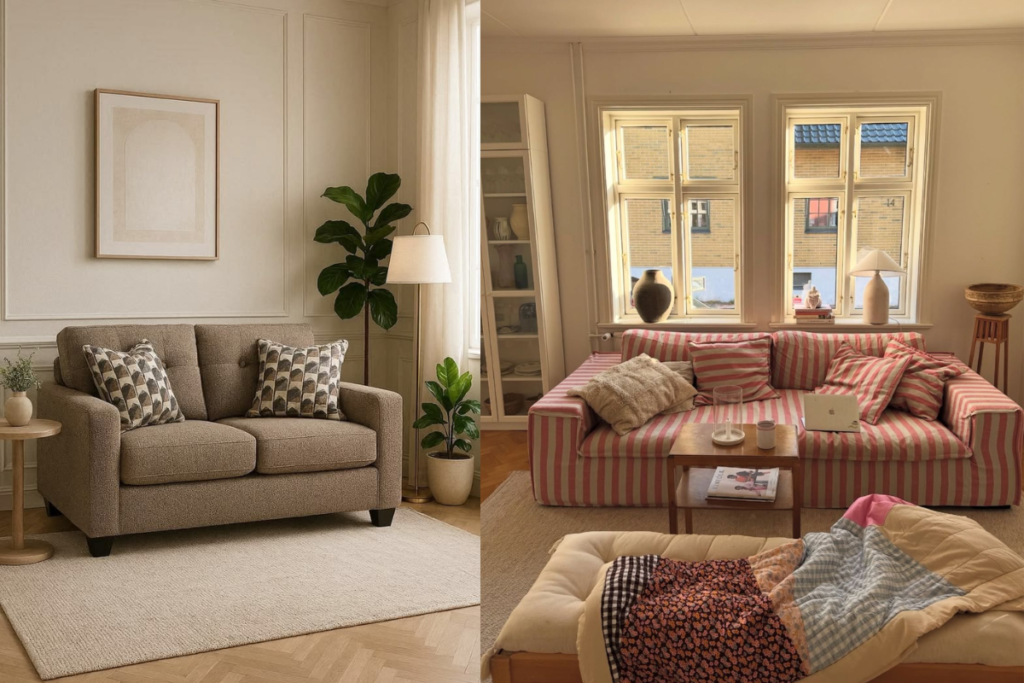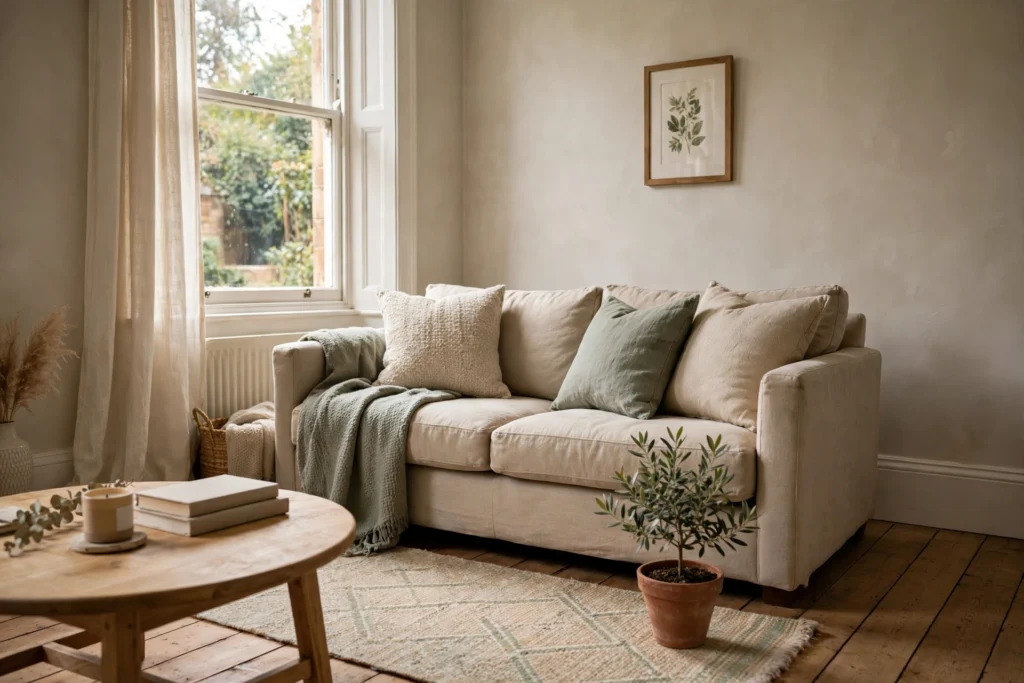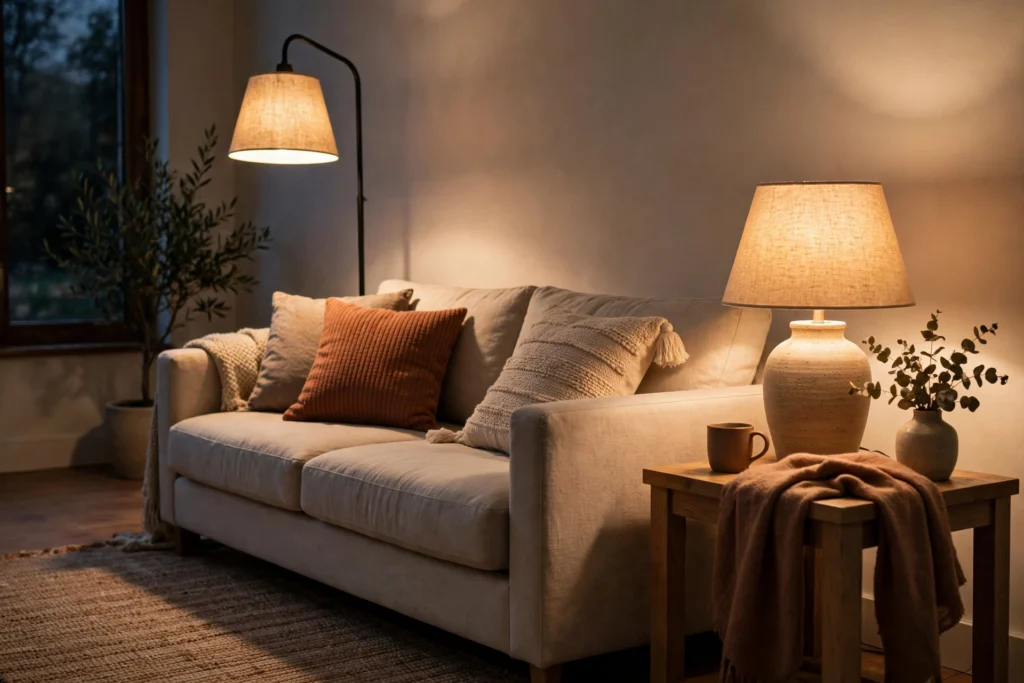
The best lamps for a living room do more than fill a dark corner. They give you light to read by, a soft glow for the evening, and a clear sense of where each seat belongs. The direct answer is simple: use layers, not one bright ceiling light. Most living rooms work well with two or three lamps at different heights, warm white bulbs, and shades set at seated eye level.
Start with the job each lamp must do. A floor lamp beside a reading chair, a table lamp on a side table, and a small accent lamp on a shelf can share the work. Choose warm light at 2700K to 3000K for relaxing, check the bulb brightness in lumens, and place the bottom of each shade at or just below eye level when you sit down. That one check prevents glare and makes the whole room feel calmer.
This guide explains how to choose table and floor lamps, bulbs and shades, how to match them to your room, and how to avoid the mistakes that make a good lamp look wrong.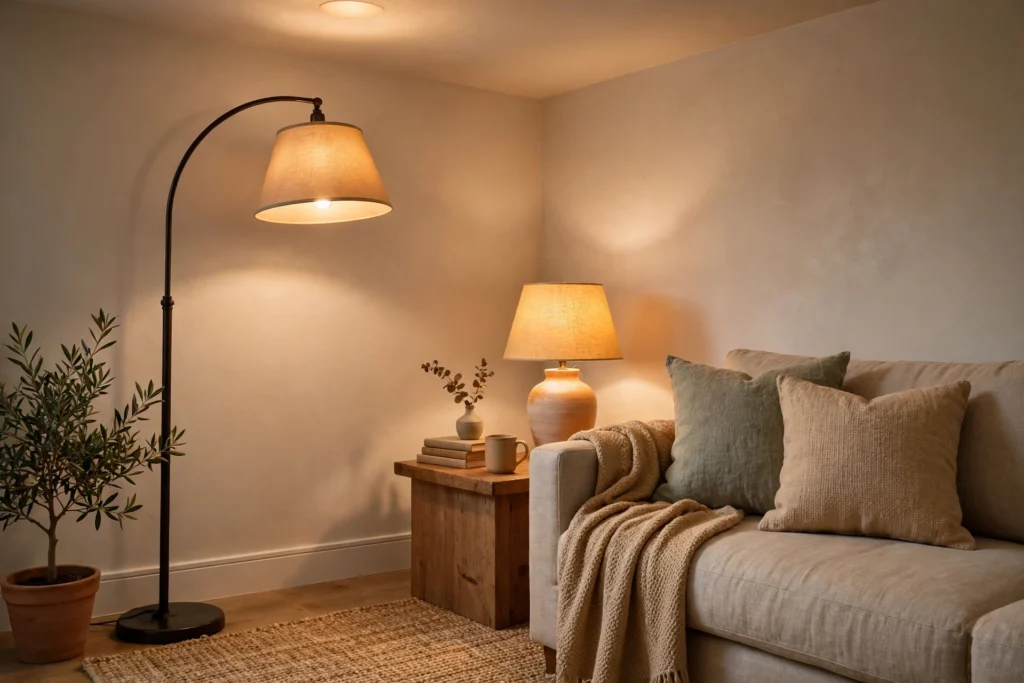
Start With the Job, Not the Lamp
Before you look at shapes or finishes, decide what the lamp must do. A lamp bought only for looks may give too little light where you read, or too much glare where you watch television.
Think in three layers. Ambient light is the general background light for the room. Task light helps you read, sew, work, or play a game. Accent light draws attention to a picture, a plant, or a shelf, and adds depth. A ceiling light can provide ambient light, but lamps are often better at the lower levels, because they bring light down to where people sit.
Ask four questions. Where do you sit most in the evening? Do you read in one chair, or move around the room? Is the room dark in the day, or does it get good daylight? Do you need light that can change, from bright for a task to soft for a film? Your answers decide whether you need a reading lamp first, a pair of matching table lamps, or a floor lamp for a dark corner.
A useful test is to imagine an ordinary evening. For example, imagine you sit in one corner with a book, while someone else watches television. One lamp should light the book without shining into the other person’s eyes. A second, softer lamp can light the rest of the room. If the room still feels flat, a small lamp near a shelf or picture may add the missing depth, rather than a brighter ceiling light.
Retailer guidance also uses this three-part idea — general, task and mood lighting — and suggests layering floor and table lamps for a softer result when ceiling lights are not needed. See the lighting buying guide from John Lewis: Lighting buying guide.
How Many Lamps Does a Living Room Need?
There is no fixed number that suits every room. Room size, ceiling height, wall color, and how much daylight you get all matter. Dark walls and high ceilings need more light. Pale walls bounce light back, so the same lamp can feel brighter.
As a starting point, one lamp is rarely enough for a main living room. Two lamps often work in a small room. Three lamps, including a floor lamp, often work in a larger or L-shaped room. Use more lamps at lower brightness, rather than one very bright lamp. The light spreads more evenly, and you can switch off the lamps you do not need.
Lumens help you plan the total. Lumens measure brightness. Watts measure power use, so watts do not tell you how bright a modern LED bulb will look. A planning example helps: a 4 m by 5 m room is 20 square meters. At a planning figure of 150 lumens per square meter, it needs about 3,000 lumens in total. That total could come from ceiling light plus lamps. For example, a floor lamp with an 800-lumen bulb and two table lamps at 470 lumens each add about 1,740 lumens. The rest can come from the ceiling light, wall lights, or a third lamp. Treat this as a planning example, not a rule for every room. If your room has dark walls, add more light and use a dimmer to soften it when you want a cozier feel.
For a small room, start with one floor lamp and one table lamp on opposite sides of the seating area. That balance stops one corner from looking much brighter than the other. For a large room, add a lamp to each seating zone, so no chair sits in shadow. For an open-plan room, use lamps to mark the living area, rather than trying to light the whole space to the same level.
Place lamps near where the light is used, not in the middle of a walkway. A lamp behind a sofa can give useful fill light, but it should not block a door or force you to walk around a cable. A lamp near a television should sit slightly behind or to the side of the screen. That gives soft background light and helps reduce glare, rather than shining into your eyes or reflecting on the screen.
Table Lamps: Size, Height and Placement
Table lamps suit side tables, consoles, and sideboards. They are easy to move, easy to change, and useful for both reading and soft evening light.
Height matters more than style at first. For a sofa side table, a table lamp of about 50 cm to 65 cm often works well. The key check is eye level: when you sit down, the bottom of the shade should sit at or just below eye level. That is often about 147 cm to 163 cm from the floor to the bottom of the shade, once the lamp stands on its table. If you can see the bare bulb when seated, the lamp is too tall, the table is too high, or the shade is too short.
Use proportion as a guide, not a strict rule. Keep the shade width at about two-thirds of the lamp’s total height, and never wider than the table. The base should leave room on the table for a book, a cup, or glasses. A heavy base helps a taller lamp stay stable.
Measure the table first. A 75 cm side table often suits a 50 cm to 65 cm lamp. A taller console of 90 cm to 100 cm often suits a 55 cm to 70 cm lamp, where the lamp is chosen more for presence. On a narrow table, choose a slim base. On a wide sideboard, a pair of lamps can look balanced, but check that the shades do not crowd ornaments or block a mirror.
Place a table lamp beside the sofa arm you use most, with the switch easy to reach. If you read with your right hand holding the book, light from behind the left shoulder often works well, because your hand does not cast a shadow on the page. That is a guide, not a rule. Try the lamp in place, sit down, and check for glare before you decide it is right.
If you use a pair, keep the bulbs the same color temperature. Two lamps at different color temperatures in the same view can look accidental. Keep both at warm white, and use the same lumen range, so one side does not look much brighter than the other.
Floor Lamps: Height, Shape and Where They Work Best
Floor lamps suit corners, reading chairs, and rooms where you have little table space. They bring light up from the floor without needing a side table, and they can mark a seating zone.
Most standard floor lamps are about 147 cm to 163 cm tall, or 58 to 64 inches. That range often lines up with seated eye level. The bottom of the shade should sit at or just above eye level when you sit down. Arc lamps can be taller, at about 165 cm to 190 cm, because the arm reaches over a sofa or chair. A shorter floor lamp of about 100 cm can suit a low ceiling or a bedroom, but in a living room it may look lost beside a tall sofa.
Check the lamp against your sofa. A useful rule is that the top of the shade should sit about 15 cm to 30 cm higher than the top of the sofa back. If the sofa back is low, a tall lamp may dominate the view. If the sofa back is high, a short lamp may disappear behind it. Sit down and look across the room. The lamp should feel like part of the seating group, not a separate object in the corner.
Different shapes do different jobs. A standard upright lamp with a drum shade gives soft, even light. A torchiere, or uplighter, sends light up to the ceiling and gives gentle background light, but it gives little direct light for reading. An arc lamp sends light down over a sofa or chair, which suits reading, but check that the base sits clear of walkways and that the arc does not hang too low over heads. A tripod lamp can look light and open, but check its weight and base width. A heavier base is safer in a home with children or pets, and a wide base is more stable than a narrow one.
Place a floor lamp beside a reading chair, about a step away from the chair center, so the light falls over your shoulder. In a corner, place it close enough to the wall to feel settled, but leave space for the cable and for cleaning. Do not place a floor lamp where its cable crosses a walkway. If the cable must cross a floor, move the lamp, use a cable cover, or choose a socket on the same side of the room. A tidy cable is a safety point as well as a style point.
Choose the Bulb Before the Shade
The bulb decides how the lamp feels. A beautiful shade cannot fix a bulb that is too cool, too dim, or flickering.
Start with color temperature. For a living room, warm white at 2700K to 3000K usually feels cozy and natural in the evening. At 2700K, light looks warm and slightly golden. At 3000K, it looks warm but a little clearer. Cool white at 4000K or more can look clinical in a living room, unless you use it for a task that needs a bright, daylight feel. If you need one bulb for both, choose a dimmable warm bulb and use the dimmer to soften it.
Next, check brightness in lumens. A reading lamp often needs about 800 lumens at the chair. A soft table lamp for mood light may need only 470 lumens. Older watt labels can mislead you. The Energy Saving Trust gives these rough equivalents for LED bulbs: a 40W old-style bulb is about 470 lumens, 60W is about 800 lumens, 75W is about 1,050 lumens, and 100W is about 1,520 lumens. Check the lumen figure on the bulb box, not only the watt figure. For a reading lamp, choose at least 800 lumens. For a mood lamp, 470 lumens is often enough.
Color rendering matters too. Look for a color rendering index, or CRI, of 80 or more. A higher CRI makes wood, fabric, and skin tones look more natural. Cheap bulbs with a low CRI can make a room look flat, even at the right brightness.
Check the fitting before you buy. Many UK lamps use a B22 bayonet cap or an E27 screw cap. Some small table lamps use E14. Check the lamp listing, and check the maximum wattage for the shade. An LED bulb of 8W to 12W often gives the same light as an old 60W to 100W bulb, while using less power. That helps with heat as well. A shade that sits too close to a hot bulb can scorch or yellow over time, so follow the lamp maker’s maximum wattage and bulb shape guidance.
Dimmers need matching parts. If your lamp has a dimmer, or your wall switch is a dimmer, use bulbs marked as dimmable. Non-dimmable LEDs on a dimmer can flicker, buzz, or fail early. If you are not sure, buy one dimmable bulb first, test it, and then buy the rest.
Shades: Material, Color and Light Direction
A shade shapes light. It can soften glare, direct light down for reading, or spread it sideways for a soft glow.
Fabric shades give a soft, warm light and suit most living rooms. Linen shades give a natural look and diffuse light well. Cotton shades are easy to clean and come in many colors. A white or cream shade lets more light through and can make a small room feel brighter. A darker shade blocks more light sideways and sends more light up and down, which can create a stronger pool of light on a table or floor.
Paper shades are light and often lower in price, but they can tear, stain, and yellow more quickly. They suit a low-use lamp or a lamp that will be changed often. Metal shades give a more focused, directional light. They suit a reading lamp or a modern room, but they can feel harsh if the bulb is exposed. Glass shades can give a soft glow or a clear sparkle, depending on whether the glass is frosted or clear. A frosted glass shade hides the bulb and softens glare.
Color inside the shade matters. A white inner lining reflects light and keeps the bulb’s color truer. A colored lining can tint the light. A black or dark lining can make the light feel warmer but dimmer. If you want a colored shade for style, check it in the evening with the bulb on, not only in daylight with the bulb off.
Shape affects direction. A drum shade gives an even spread up and down. A tapered shade, wider at the bottom, sends more light down. A coolie shade, wide at the bottom and narrow at the top, can suit a traditional lamp but may hide the bulb from some angles. An empire shade, wider at the bottom, suits a table lamp with a narrow base. Keep the shade at least 2 cm to 3 cm away from the bulb on all sides, unless the lamp maker says otherwise. That space helps with heat and with even light.
If the shade is too small, the lamp can look top-heavy and the light can feel harsh. If the shade is too large, the lamp can look squat and the shade may wobble. A shade that is about two-thirds the height of the lamp, as noted above, is a good starting point. For a floor lamp, a larger shade can work, but check that it does not block a walkway or bump a sofa arm.
Match Lamp Style to Your Room Without Forcing a Set
A lamp should feel like part of the room, not a separate object. You do not need a matching set. Two lamps that share one detail, such as the same metal finish, the same shade color, or the same height, can look more considered than an exact pair.
Start with your sofa and main colors. A neutral sofa gives you freedom to choose a stronger lamp color or finish. A colorful sofa often suits a calmer lamp. If your room has warm wood, a brass or black metal lamp often works well. If your room has chrome or nickel, a lamp in the same finish can tie the room together. Keep to one or two metal finishes in view, rather than mixing brass, chrome, black, and copper in one corner.
Think about scale. A large sofa needs a lamp with presence. A small side table needs a slim lamp. A tall floor lamp can balance a high ceiling. A low ceiling suits a shorter lamp or a lamp with a compact shade. If your room has a strong pattern in the rug or curtains, a plain lamp shade is often easier to live with. If the room is plain, a textured or patterned shade can add interest.
Traditional rooms often suit lamps with a classic drum shade, a turned wood base, or a brass finish. Modern rooms often suit a slim metal stem, a simple drum shade, or a tripod base. A mid-century room can suit a globe shade or a tapered shade. A rustic room can suit wood, rattan, or a fabric shade with texture. The style label matters less than whether the lamp’s scale, finish, and light feel right in the room.
Color can be a useful link. A lamp base in a color that appears elsewhere in the room, such as a cushion, a throw, or a picture frame, can make the room feel planned. A lamp shade in a warm white can soften a room with cool walls. A black shade can add contrast in a pale room, but check that it does not block too much light for reading.
If you are refreshing a room, a lamp change is often cheaper than a sofa change. For ideas on which colors may look dated, and simple ways to refresh them, see this guide to outdated living room couch colors and simple refresh ideas: outdated living room couch colors and simple refresh ideas. For help choosing the main seat first, see this sofa guide to size, comfort, materials, style and value: sofa guide to size, comfort, materials, style and value.
Lamps for Small, Dark and Awkward Living Rooms
Small and dark rooms need light that feels bright without crowding the floor.
In a small room, choose slim floor lamps and compact table lamps. A tripod lamp can look open, but its legs take floor space. A slim stem lamp with a small base takes less floor space and is easier to place beside a sofa. A wall-mounted lamp or a clamp lamp can free a table, but check that the fixing is safe and the cable is tidy.
In a dark room, use light-colored walls and mirrors to bounce light, and use lamps at different heights. A floor lamp in a dark corner, a table lamp on the opposite side, and a small lamp near a shelf can lift the whole room. Avoid one bright ceiling light that creates harsh shadows. Use warm bulbs and dimmers to keep the room cozy, rather than making it feel like an office.
For an awkward room, such as an L-shape or a room with a bay window, place a lamp in each zone. A reading lamp in the bay, a floor lamp in the main seating area, and a small lamp on a console can define each use. In a room with a low ceiling, avoid a tall torchiere that sends light only upward. A lamp with a shade at seated eye level often feels better.
For a room with a television, keep the lamp light soft and to the side. A lamp directly behind the television can create a halo that some people find distracting. A lamp to the side of the sofa, with a warm bulb, usually works better. If you watch films in the dark, use a very low lamp or a dimmable lamp at its lowest setting, rather than a bright lamp.
Budget, Prices and What to Check Before You Buy
Lamp prices vary widely. A simple table lamp can cost under £20. A well-made floor lamp can cost £80 to £200 or more. A designer lamp can cost far more. Price alone does not tell you whether a lamp will give good light, stay stable, or last.
Set a budget for the lamp, the bulb, and any shade separately. Some lamps are sold without a bulb or shade. Check what is included before you compare prices. A lamp that looks cheap may need a £15 shade and a £8 bulb, while a more expensive lamp may include both.
Compare like with like. Check the lamp height, shade size, base weight, material, bulb fitting, maximum wattage, and whether it is dimmable. Check the length of the cable and whether the switch is on the cable, on the base, or on the shade. A cable that is too short can force you to use an extension lead, which is not ideal in a living room.
Read the listing for stability and safety details. A heavy base is a good sign. A lamp that wobbles in the shop is unlikely to feel stable at home. Check the return terms. You need to test the lamp in your room, at night, with the bulb you plan to use. A lamp that looks right in a bright shop can look wrong in a dim room.
Secondhand lamps can be good value, but check the cable, plug, and shade. A frayed cable, a loose plug, or a cracked shade is a reason to walk away. If you rewire a lamp, use a qualified person and follow UK safety guidance. Do not use a lamp with damaged wiring.
A useful planning check is to divide the total cost by the years you expect to use the lamp. A £120 floor lamp used daily for ten years costs about £12 a year, before bulb replacements. A £25 lamp that wobbles, flickers, or needs replacing in a year can cost more in the long run. Treat that as a planning aid, not a guarantee of lifespan.
Safety, Cables and Care
Lamps are electrical items. Safety checks matter as much as style.
Check the cable, plug, and switch before first use and from time to time. Look for fraying, cracks, loose parts, or a plug that feels hot. If you find damage, stop using the lamp and follow the maker’s guidance. Do not use a lamp with exposed wiring.
Keep cables out of walkways. Use cable clips or covers where needed, and keep cables away from heat sources, such as radiators and open fires. Do not run a cable under a rug where it can be damaged or overheat. Do not overload a socket with too many high-power items on one extension lead.
Use the bulb type and maximum wattage shown on the lamp. Do not fit a bulb that is too large for the shade, or a bulb that touches the shade. Let bulbs cool before you change them. For a lamp with a metal shade, check that the shade does not become too hot to touch during normal use.
Place lamps on a stable, level surface. A lamp on a wobbly table or a soft rug can tip. Keep lamps away from water, such as a vase that could spill, and away from curtains that could touch a hot bulb. In a home with children or pets, choose a heavier base, keep small parts out of reach, and check that the lamp cannot be pulled over by its cable.
In the UK, electrical products sold for home use must meet safety rules, including the Electrical Equipment (Safety) Regulations 2016. See the official guidance on the Electrical Equipment (Safety) Regulations 2016: Electrical Equipment (Safety) Regulations 2016. If you buy a lamp from outside the UK, check that it has the correct plug, voltage, and safety markings for UK use.
Care is simple. Dust shades with a soft cloth or a vacuum on a low setting. Wipe metal bases with a dry cloth. Do not use water on fabric shades unless the maker says it is safe. Replace a damaged shade, rather than taping it, because a damaged shade can sit too close to the bulb. Keep spare bulbs of the same color temperature, so a replacement does not change the room’s feel.
A Simple Buying Checklist
Use this checklist before you pay. It helps you compare lamps on the points that matter, rather than on looks alone.
- Job: Is the lamp for reading, mood light, accent light, or a mix? Which seat will it serve?
- Number: How many lamps will the room need, and at which heights? Have you counted the ceiling light in the total lumens?
- Height: Does the bottom of the shade sit at or just below seated eye level? For a floor lamp, is the top of the shade about 15 cm to 30 cm above the sofa back?
- Bulb: Is the color temperature warm white at 2700K to 3000K? Is the brightness in lumens right for the job? Is the fitting B22, E27, or E14, and is the bulb dimmable if needed?
- Shade: Does the shade direct light where you need it? Is it at least 2 cm to 3 cm from the bulb? Does the color inside the shade keep the light true?
- Stability: Is the base heavy and stable? Does the lamp wobble? Is the cable long enough, and does it avoid walkways?
- Style: Does the finish, scale, and shade color fit the room? Does it share one detail with another lamp or with the sofa?
- Safety: Is the cable, plug, and switch in good condition? Does the lamp meet UK safety rules, with the correct plug and markings?
Common mistakes to avoid: buying one bright lamp instead of layers; choosing a shade that hides the bulb when seated; mixing color temperatures in the same view; placing a lamp where its cable crosses a walkway; and buying a lamp without checking whether the bulb and shade are included. A lamp that passes the checklist above is more likely to feel right on the first evening, and on the hundredth.
For more help planning the whole room around your lamps, see this guide to ideas for designing a living room: ideas for designing a living room. Use it to test the lamp positions against the room’s main activities, not only against a single wall.
Frequently Asked Questions
How many lamps should a living room have?
Most main living rooms work well with two or three lamps at different heights, plus the ceiling light. A small room may need only two. A large or L-shaped room may need three or more, one for each seating zone. Use more lamps at lower brightness, rather than one very bright lamp, so the light spreads evenly.
How tall should a floor lamp be beside a sofa?
Most standard floor lamps are about 147 cm to 163 cm tall. The bottom of the shade should sit at or just above seated eye level, and the top of the shade should sit about 15 cm to 30 cm higher than the top of the sofa back. Arc lamps can be taller, at about 165 cm to 190 cm, because the arm reaches over the sofa.
What color bulb is best for a living room?
Warm white at 2700K to 3000K usually feels cozy and natural in the evening. At 2700K, light looks warm and slightly golden. At 3000K, it looks warm but a little clearer. Cool white at 4000K or more can look clinical in a living room. Keep all lamps in the same view at the same color temperature.
Can lamps replace a ceiling light?
In a small room, two or three well-placed lamps can give enough light for most evening use, especially with a dimmer. In a larger room, lamps plus a ceiling light often work better, because lamps alone may leave dark corners. Plan the total in lumens, and test the lamps at night before you decide to rely on them alone.
Should lamps match, or can they be different?
They do not need to match exactly. Lamps that share one detail, such as the same metal finish, the same shade color, or the same height, often look more considered than an exact pair. Different lamps can work if they share a color, material, or style period, and if they give the same color temperature of light.
Is a dimmer worth it for living room lamps?
Yes, if the lamp and bulb support it. A dimmer lets you move from bright task light to soft mood light without changing bulbs. Use bulbs marked as dimmable, and test one bulb first if you are not sure your dimmer switch is compatible with LEDs.
A Practical Close
The best lamps for your living room are the ones that give the right light, in the right place, at the right height. Start with the job, plan the layers, check the bulb in lumens and color temperature, and place the bottom of each shade at seated eye level. Test the lamp in your room at night, with the bulb you plan to use, before you decide it is right. A calm, well-lit room is rarely the result of one bright lamp. It is the result of two or three lamps, each doing its own job well.