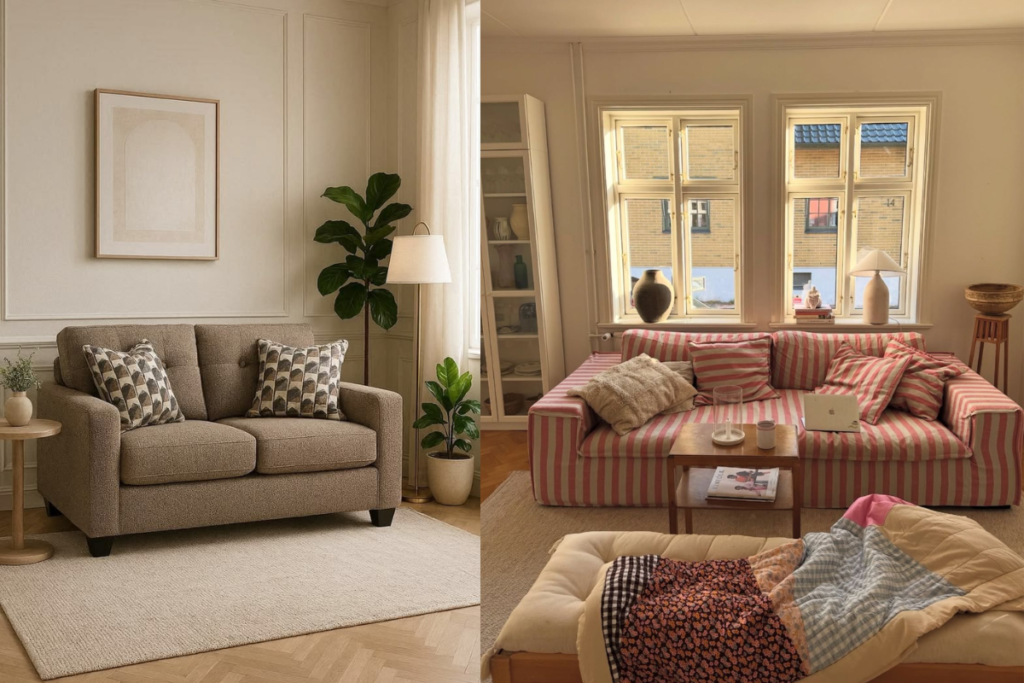
A lounge can look tidy and still feel wrong. The sofa may face the wrong way, the rug may float in the middle of the floor, or the light may feel harsh in the evening. Small choices like these shape how a room feels every day.
The direct answer is simple. Lounge room styling ideas work best when you start with one clear focal point, arrange seating around it, choose a rug large enough to anchor the group, and layer colour, texture and light in small steps. Keep walkways clear, repeat two or three colours, and leave some empty space. That approach suits most UK living rooms, from a small flat to a larger open-plan room.
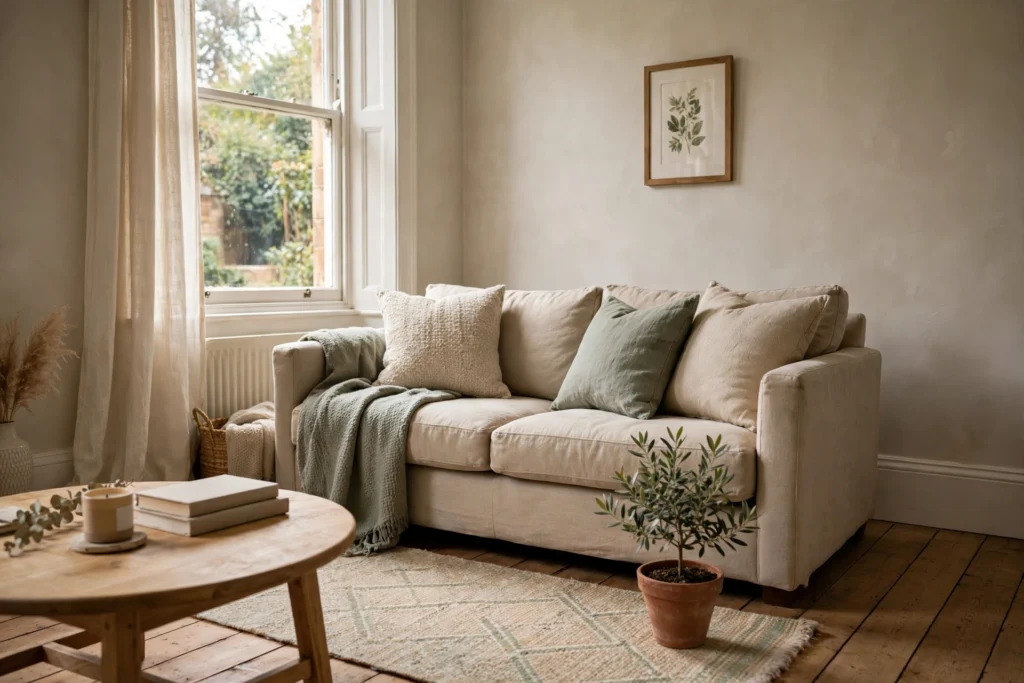
This guide explains each choice in plain language. It covers layout, colour, sofas and chairs, rugs, cushions, lighting, walls, curtains, storage and budget planning. Use the parts that fit your room and ignore the rest. You do not need to buy everything at once.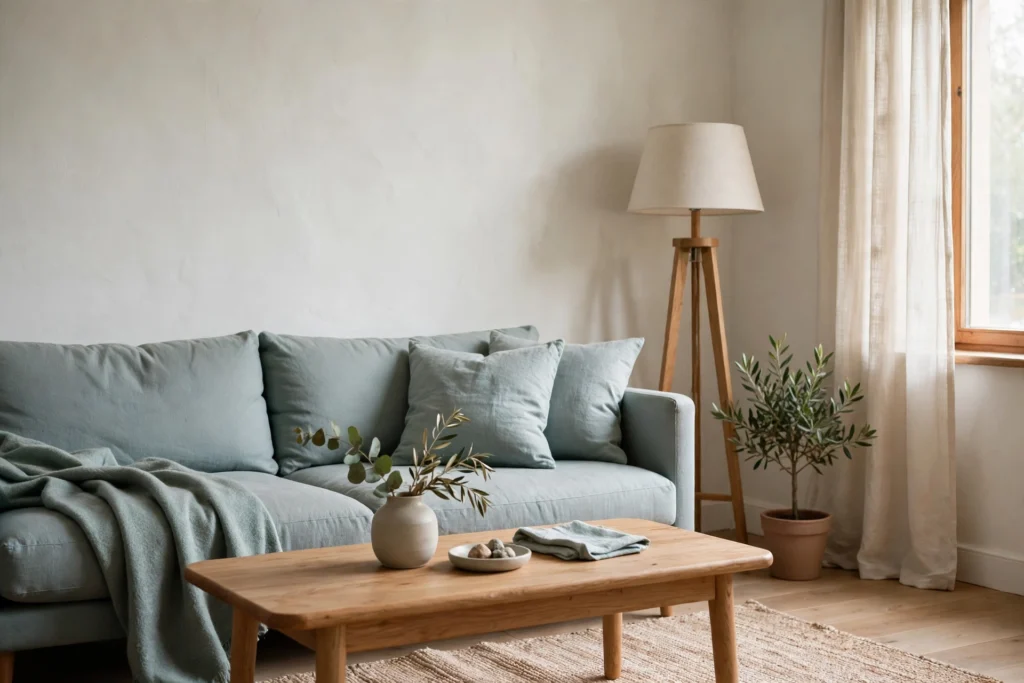
What Lounge Room Styling Really Means
Styling a lounge is not only about decoration. It is about how the room is used.
Think about a normal week. Do you watch television most evenings, read in a corner, host friends at weekends, or help children with homework at the table? The answer should shape the layout. A room built only for photographs can feel awkward to live in.
Start by naming the main job of the room. Then name the second job, if there is one. For example, a lounge may be mainly for relaxing and watching television, and secondly for reading. A different lounge may be mainly for conversation, with a television in another room. When the main job is clear, the focal point and furniture order become easier to decide.
Also notice what bothers you now. Is the room dark in the afternoon? Does clutter collect on every surface? Do people walk through the seating area to reach the kitchen? Write down two or three problems before you shop. That list will help you spend money on fixes, not only on new items.
Choose One Focal Point First
Every lounge needs a place for the eye to rest. Without one, furniture can drift to the walls and the room can feel unsettled.
Common focal points in UK homes include a fireplace, a large window or bay window, a television, a feature wall, or a large piece of art. In an open-plan room, the focal point may be the seating group itself.
Choose one main focal point. Arrange the largest seat to face it, or angle seats towards it. Other items should support that choice, not compete with it. A television and a fireplace on opposite walls, for example, can force an awkward compromise. If both matter, decide which one is used most, and place the main seating for that one. A smaller chair can serve the second focal point.
Once the focal point is set, check it from the doorway. The room should read clearly when you walk in. If the back of a sofa blocks the view, try turning the group or using a lower sofa back. If a large unit dominates the wall, soften it with books, plants or art at the sides.
Plan the Layout Before You Buy Anything
Measure the room before you look at furniture. A tape measure, a pencil and a rough sketch on paper are enough for most rooms.
Measure the length and width of the room. Note doors, windows, radiators, fireplaces and plug sockets. Note the swing of each door. Then measure the seating area you want to create, not only the whole room. A rug guide from Haven Room stresses this point: measure the space your furniture actually occupies, and add space at the sides, rather than choosing a rug by the room size alone. That advice applies to the whole layout too.
Leave room to walk. As a practical starting point, allow about 60 to 75 cm for a main walkway in a small room, and 80 to 90 cm where space allows. Leave about 45 to 60 cm between a sofa and a coffee table so you can sit down and reach a drink without stretching. These are planning guides, not strict rules. A narrow terrace lounge may need tighter gaps, but the gaps should still feel safe and easy.
Layouts that suit small lounges
In a small lounge, scale matters more than style. A low, shallow sofa can leave more visible wall and floor. Two smaller sofas at a right angle can give more seats than one very large sofa. Two armchairs opposite a sofa can create a conversation group without blocking the room.
Wayfair guidance for small living rooms suggests keeping the layout simple, using one sofa to define the space, and adding a round coffee table to keep walking space clear. A round table has no sharp corners to catch a shin in a tight room. A storage ottoman can replace a coffee table and give extra seating and hidden storage.
Do not push every piece against the wall by habit. In a very small room, that may be the only option. In a medium room, pulling the sofa a few centimetres from the wall can make the group feel more settled, especially once a rug is under the front legs. Try the layout for a few days before you fix anything to a wall.
Layouts for narrow rooms and open-plan rooms
Narrow rooms, including many Victorian terraces, often become a corridor if seating is placed along both long walls. Break the room into zones instead. Put the main seating group near the bay window or fireplace. Put a reading chair, a small desk or a plant group in the second zone. A low bookcase or a console behind a sofa can mark the edge of a zone without blocking light.
In an open-plan room, use a rug to mark the lounge area. Face the sofa away from the dining area if that helps define the space. A sideboard behind the sofa can hold dining items and act as a boundary. Keep a clear path from the kitchen to the seating area, and avoid placing a coffee table in that path.
For more layout ideas, see Ideas For Designing A Living Room.
Layouts for corner sofas
A corner sofa can suit a family lounge, but it needs space. Place the longest run where it does not block a door or a radiator. Leave the open side clear for entry to the seats. A round or oval coffee table often works better than a long rectangular table, because it leaves more room to move around the corner.
If the corner sofa feels too large, check whether one section can be moved. Some modular sofas can be split into a smaller sofa and a chair. If yours cannot, use lighter cushions and a plain rug to reduce its visual weight.
Choose a Colour Scheme You Can Live With
Colour sets the mood of a lounge. Light colours can make a small, north-facing room feel brighter. Dark colours can make a large room feel cosier and more enclosed. Neither choice is right for every home.
Start with the light in your room. A north-facing lounge in the UK often receives cooler, flatter light. Warm neutrals, soft creams, warm greys and muted greens can stop it feeling cold. A south-facing lounge receives stronger light, so cooler greys, soft blues and pale greens can feel fresh rather than chilly. Test paint in the room at different times of day. A colour that looks calm in a shop can look pink, grey or green at home.
A simple way to organise colour is to use three levels. Use one main neutral for walls and large furniture. Use a second colour for curtains, a rug or a large chair. Use a third colour in small amounts for cushions, art or a throw. Repeat each colour at least twice so the room feels linked. For example, a warm white wall, a sage green sofa and a small amount of terracotta in cushions and a vase can feel calm without being plain.
Dulux named Rhythm of Blues, a family of three blue shades, as its Colour of the Year for 2026. The shades are Free Groove, a vibrant blue, Mellow Flow, a light blue, and Slow Swing, a deep blue. You do not need to follow a trend to style a lounge well. The useful lesson is that blues can work in small amounts, such as cushions or one painted wall, as well as in a full scheme. Pair a deep blue with warm wood and cream to stop it feeling cold.
When you repaint, buy a tester pot first. Paint a large patch on card and move it around the room. Check it in daylight, in evening light and next to your sofa fabric. If you rent, check your tenancy agreement before painting. Removable colour through cushions, art and throws is often safer for renters.
If your sofa colour now feels dated, check the guidance in Outdated Living Room Couch Colors before you replace it. A new throw, cushions or rug can sometimes refresh a sofa without the cost of a new one.
Sofas, Chairs and How People Actually Sit
The sofa is usually the largest item in a lounge. Its size, depth and fabric affect comfort more than its shape alone.
Sit on a sofa before you buy it if you can. Check the seat depth. A shallow seat suits shorter people and a formal room. A deep seat suits lounging and film nights, but it can be hard to sit upright in. Check the seat height too. Your feet should rest flat on the floor when you sit back. Check the arm height. Low arms can make a room feel open. High arms can feel supportive and cosy.
Think about who uses the room. A family with young children may need washable covers, a firm seat and no sharp metal edges. A household with pets may need a tight weave that does not catch claws easily, and covers that can be cleaned. An older person may need a firmer, higher seat that is easy to stand up from. A lounge used mainly by two adults can suit a softer, lower sofa.
Chairs add flexibility. One good armchair can create a reading corner. Two matching chairs can balance a sofa and make conversation easier. Armless chairs take less visual space and can be moved easily. A chair with a small side table and a floor lamp becomes a useful spot, not only a spare seat.
Do not fill every gap with seating. Leave space for a side table, a lamp and a clear path. A lounge with too many seats can feel like a waiting room. A lounge with the right number of seats, placed close enough to talk easily, feels welcoming.
Rugs: Size Matters More Than Pattern
A rug can pull a seating group together. A rug that is too small is one of the most common lounge styling mistakes. It can make even a large room feel disjointed.
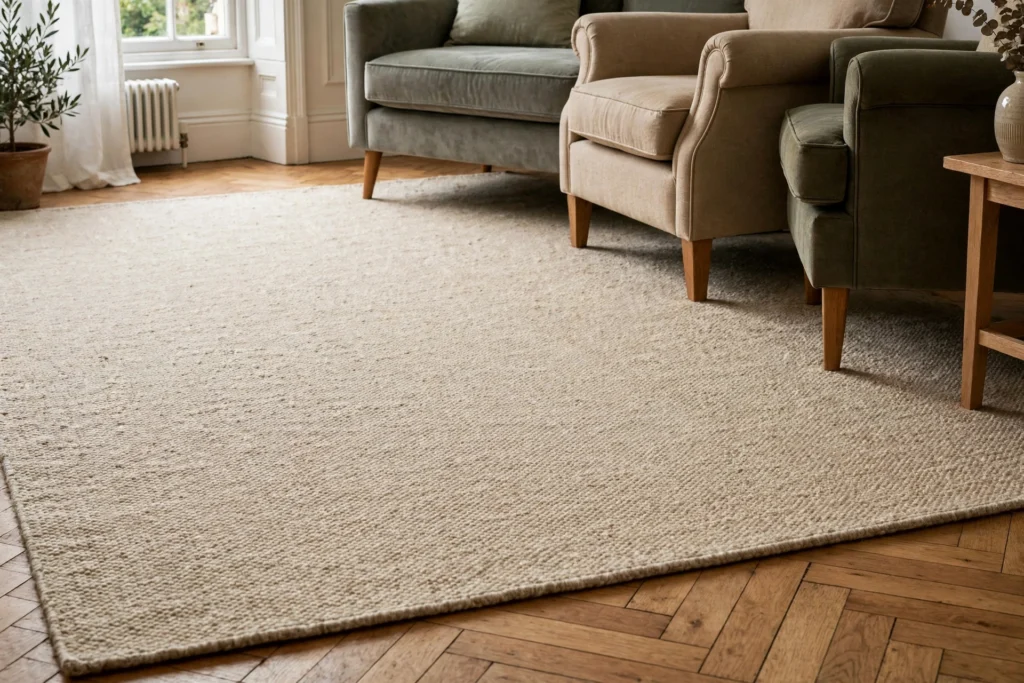
Use the front-leg rule as a starting point. The front legs of the sofa and chairs in the seating group should sit on the rug, and the coffee table should sit fully on it. That simple rule anchors the group and stops the rug looking like a mat dropped in a gap. In a larger room, a rug large enough for all legs to sit on it can feel more luxurious, with a border of bare floor at the edges.
As a rough guide for typical UK homes, 160 x 230 cm suits a two-seater sofa plus one armchair, and 200 x 290 cm suits a three-seater sofa plus two armchairs. A corner sofa often needs at least 200 x 290 cm. These are starting points. Measure your own seating group and add at least 20 to 30 cm on each side. Leave a sliver of bare floor at the walls so the rug does not touch the skirting.
Choose the rug material for the way the room is used. A flatweave or low-pile rug is easier to clean and suits a busy family room or a home with pets. A thicker wool rug feels softer underfoot and can help a hard floor feel warmer and quieter. In a rental, use an anti-slip pad cut slightly smaller than the rug. Avoid adhesive grips that could mark wood floors.
Layering can help if a large rug is too costly. Place a large plain rug as a base and a smaller patterned rug on top, in the main seating area. Keep the colours linked so the layers look planned. In a small room, a rug laid lengthways often works better than a square rug forced into a long, slim space.
Cushions and Throws: Texture Without Clutter
Cushions and throws are the easiest way to change a lounge. They are also easy to overdo. The goal is comfort and balance, not a sofa covered in cushions you must move before you sit down.
Start with size. Place larger cushions at the back or outer corners. Layer smaller cushions in front. Mix one pattern, one plain colour and one texture, such as linen, velvet or a woven fabric. Keep at least half the cushions in solid colours so the arrangement does not feel chaotic.
A useful starting formula is the 2-2-1 rule described by Ideal Home. Use two large cushions at the ends, two slightly smaller cushions next to them, and one statement cushion in the centre, for five cushions in total on a classic three-seater sofa. The rule suits a symmetrical sofa best. It can overwhelm a small settee or a corner sofa. For a two-seater, three cushions are often enough. For a corner sofa, use cushions along each run and leave the corner clear for sitting.
Read the Ideal Home explanation of the 2-2-1 sofa cushion styling rule if you want a visual starting point.
Throws should be easy to use. Drape one throw over an arm or fold it on the back of a chair. Choose a washable fabric for a family room. A throw in the same colour family as the cushions will look calm. A throw in a contrasting colour can act as an accent, but only if the rest of the room is fairly plain.
Plump cushions often. A cushion that sags can make a good sofa look tired. Check care labels before washing covers. Feather fillings can clump if washed badly, so follow the label and dry covers fully before use.
Lighting: Layer Light for Day and Evening
A single ceiling light rarely suits a lounge. It can feel flat during the day and harsh at night. Layered lighting gives you choice.
Use three layers. First, general light from a ceiling light or pendant. Second, task light from a floor lamp or table lamp for reading. Third, accent light from a wall light, a picture light or a small lamp on a shelf. A dimmer switch can help, but only use a dimmer and bulbs that are made to work together. If you are unsure, ask a qualified electrician. Do not attempt electrical work yourself if you are not qualified.
Place a floor lamp beside a reading chair, with the light falling over the shoulder, not into the eyes. Place table lamps on side tables at sofa height so the light feels close and warm. In the evening, use warm light and lower levels. Many people find a warm white bulb, around 2700K, feels cosy in a lounge. Check the bulb packaging for the colour temperature and brightness before you buy.
Light also affects colour. A wall that looks pale in daylight can look warmer under a lamp. Test paint and fabric under the lamps you will actually use.
For renters, plug-in wall lights, floor lamps and battery lights can add layers without drilling. Keep cables tidy and away from walkways. Do not run a cable under a rug where it could become a trip hazard or overheat. Check lamp shades for the maximum bulb wattage shown on the fitting, and do not exceed it.
Walls, Art and Mirrors
Walls give a lounge character without taking floor space. Start with one large piece or a small group, rather than many small frames spread across the room.
Hang art at eye level when you are sitting down, not at standing height only. The centre of a large piece is often about 145 cm from the floor, but adjust it for the height of your sofa and the size of the piece. Leave a gap of about 15 to 20 cm above a sofa back for a large frame. If you hang a gallery wall, plan it on the floor first. Keep the gaps between frames even, and use one colour of frame or one theme to link the group.
Mirrors can help a small or dark lounge. Place a mirror opposite a window to reflect light. Place it where it reflects something pleasant, such as a plant or a view, not clutter. A large mirror can act as a focal point. Several small mirrors can look busy, so use them with care.
Wallpaper can add pattern and texture. A bold wallpaper on one wall can work in a lounge, especially behind a sofa or in an alcove. A busy pattern on all four walls can overwhelm a small room. If you want pattern on the ceiling, read Wallpaper on Ceiling first, because ceiling paper needs careful preparation and a suitable pattern scale.
Shelves should hold a mix of books, plants and personal items. Leave empty space on a shelf. A shelf filled edge to edge can look like storage, not styling. Use bookends or a small plant to break a long row of books. Secure tall bookcases to the wall, especially in a home with children, following the maker instructions.
Curtains and Window Dressing
Curtains affect light, privacy and the sense of height in a room. Short, narrow curtains can make a window look smaller and a ceiling look lower.
Hang the curtain rod high and wide as a general guide. Place it about 15 to 30 cm above the window frame, or closer to the ceiling in a room with a low ceiling. Extend the rod about 20 to 30 cm past each side of the frame so the curtains stack clear of the glass when open. That lets in more light and makes the window look wider.
Choose curtains that just touch the floor, known as kissing the floor, for a tidy lounge look. A slight puddle of 3 to 8 cm can feel relaxed, but it collects dust and can be a trip hazard in a busy room. Avoid curtains that stop well above the floor in a lounge, unless a radiator or a low sill makes floor-length curtains unsafe or impractical. Keep curtains clear of radiators and heaters. Check the maker guidance for your heater and curtain fabric.
Use enough fabric for fullness. Panels that total about two to two and a half times the window width usually look fuller when closed. A sheer layer can give daytime privacy while still letting light in. A blackout lining can help with sleep if the lounge is also a sleeping space, but it makes curtains heavier, so use sturdy brackets.
If you are choosing between curtains and blinds, the comparison in Curtains Over Blinds can help you weigh light control, privacy and style.
Storage That Keeps the Room Calm
A lounge collects clutter quickly. Remote controls, chargers, books, toys, throws and games all need a home. Storage that is easy to use will be used. Storage that is hard to reach will be ignored.
Use furniture that does more than one job. A storage ottoman can hold throws and games. A sideboard can hold board games, chargers and dining items in an open-plan room. A coffee table with a drawer can hold remotes. A tall, narrow cabinet can use vertical space without taking much floor area.
Use alcoves and awkward corners. Fitted shelves in alcoves beside a chimney breast can hold books and display items. A window seat with storage underneath can suit a bay window. In a rental, freestanding shelves and baskets can give similar storage without fixed fittings.
Keep everyday items in baskets or boxes. Use one basket for remotes and chargers, one for throws, and one for toys if needed. Label boxes only if that helps you. Clear boxes can help you find items quickly, while woven baskets can add texture. Keep the number of visible containers low. Too many baskets can look like clutter themselves.
Hide cables where you can. Use a media unit with a back panel, cable clips along a skirting board, or a small box for a power strip. Keep ventilation gaps around televisions and consoles. Do not cover vents or place fabric over warm equipment.
For a calmer, more minimal approach, see Minimalist Furniture. Minimal styling does not mean an empty room. It means keeping only items that are useful or loved, and giving each one a clear place.
Texture, Plants and Personal Details
Texture makes a plain colour scheme feel rich. Mix smooth and rough surfaces. Pair a leather or smooth fabric sofa with a woven throw, a wooden table and a soft rug. Pair a velvet sofa with linen cushions and a matte ceramic vase. Use wood, metal, glass, wool and linen in small amounts rather than all at once.
Plants can soften a lounge and add life. Choose plants that suit your light. A large plant in a corner can balance a tall bookcase. A small plant on a side table can soften a hard edge. Check whether a plant is safe for pets or children if that matters in your home. Water plants over a sink or tray, not over a rug or wooden floor. If you struggle to keep plants alive, use one or two hardy plants rather than many delicate ones.
Personal items make a lounge feel like home. Use photographs, books you have read, items from a trip, or handmade objects. Group personal items in odd numbers, such as three items on a shelf, rather than scattering them. Rotate items by season if you like change. Keep sentimental items away from direct sunlight if they could fade.
Avoid filling every surface. Leave one surface clear, such as a coffee table with only a book and a small vase. Empty space helps the eye rest and makes the styled areas stand out.
Five Style Directions, and Who Each One Suits
| Style direction | Main features | Suits best |
|---|---|---|
| Scandinavian calm | Light wood, soft greys, white walls, linen, simple shapes | Small rooms, north-facing rooms, renters who want a light feel |
| Modern minimal | Clean lines, neutral palette, hidden storage, few patterns | Open-plan rooms, people who like tidy surfaces |
| Traditional comfort | Rich fabrics, layered lighting, classic shapes, wood tones | Period homes, larger lounges, readers who want a cosy room |
| Eclectic mix | Mixed eras, bold colour, varied patterns, collected items | People who enjoy personal objects and do not want a showroom look |
| Coastal light | Pale blues, whites, natural fibres, rattan, linen | Bright rooms, homes near the coast, summer houses |
Use the table as a starting point, not a strict rule. Most real lounges mix two directions. For example, a Scandinavian base with one traditional chair, or a modern room with eclectic art, can feel personal and balanced. Keep the colour palette and the scale of furniture consistent, even if the styles vary.
Renter-Friendly Lounge Styling Ideas
Renters can style a lounge well without painting or drilling. Check your tenancy agreement first, and keep a record of the room condition when you move in.
Use a large rug to cover a floor you do not like. Use removable hooks or leaning art to avoid holes in walls. Use a floor lamp instead of a wall light. Use curtains on a tension rod if a fixed rod is not allowed, but check the weight limit and the window frame.
Use furniture that can move with you. A modular sofa, a folding side table and a storage ottoman can adapt to a new room. Avoid very large fixed units that may not fit the next home. Use plants, cushions and throws to add colour, because they travel easily.
When you leave, remove all fixings, fill holes only if your agreement asks you to, and clean the room. Keep receipts and photos of any agreed changes.
A Practical Weekend Plan
You do not need a full renovation to improve a lounge. A weekend plan can help you test ideas before you spend much money.
On Saturday morning, clear the room and clean it. Move furniture to the sides and vacuum the floor. Measure the room and sketch two layout options. Try the first option and live with it for a few hours. Check walkways, light and the view from the doorway.
On Saturday afternoon, test colour and texture. Move cushions, throws and art from other rooms to try combinations. Take photographs from the doorway. Photographs can show imbalance that is hard to see when you stand in the room.
On Sunday, make a short shopping list. List only items that solve a problem you noticed. For example, a larger rug, one floor lamp, or two cushion covers. Buy one item at a time if you can, and test it before you buy the next. That slower pace often saves money and avoids impulse buys.
Example Budgets: What a Refresh Might Involve
Prices vary widely by retailer, size, material and location, and they change often. The figures below are example scenarios only, not verified prices or quotes. Check current retailer prices before you buy, and separate product cost from delivery and fitting cost.
An example low-cost refresh, around £150, might cover new cushion covers, a throw, a plant and a small mirror from budget retailers, using furniture you already own. This suits a renter or a quick seasonal change.
An example mid-range refresh, around £500, might cover a new rug, two lamps, curtains and cushion covers. This suits a lounge that already has a good sofa but needs better light and texture.
An example larger refresh, around £1,500 or more, might cover a new rug, curtains, lighting and a storage sideboard, plus paint if you own the home. If you hire a painter or an electrician, add labour, materials and any call-out cost separately. Get a written quote before work starts, and check whether the quote includes VAT.
Set a limit before you shop. Keep a small reserve for delivery, fixings and returns. If an item needs assembly or fitting, check the time and tools needed. A bargain that needs costly fitting may not be a bargain.
Common Lounge Styling Mistakes to Avoid
- Choosing a rug that is too small for the seating group.
- Pushing all furniture against the walls in a medium or large room.
- Using only one ceiling light for the whole evening.
- Buying cushions in one size and one pattern, with no texture.
- Hanging curtains too low, too short or too narrow.
- Filling every shelf and surface, leaving no empty space.
- Mixing too many bold colours with no repeated neutral.
- Placing a television where glare from a window makes it hard to watch.
- Blocking a radiator with a sofa, curtains or a large unit.
- Buying a sofa without sitting on it or measuring the doorway and stairs.
Check doorways, hallways and stair turns before you order large furniture. Measure the packaged size as well as the sofa size. In a flat, check lift size and delivery access. Returning a large sofa can be costly and slow.
Seasonal Refreshes Without a Full Redesign
A lounge can change with the seasons through textiles and small details. In spring and summer, use lighter throws, linen cushions and fresh plants. Open curtains fully to use daylight. In autumn and winter, add wool throws, deeper colours and warmer lamps. Move a reading chair closer to a lamp for darker evenings.
Store out-of-season textiles in a clean, dry box. Wash covers before storage if the care label allows it. Check for damp or moth damage when you bring items back out. A seasonal change does not need new furniture. Two sets of cushion covers can give a room a different feel for a fraction of the cost of new cushions.
Safety and Practical Checks
Keep safety in mind when you style a lounge, especially in a home with children or older people.
Secure tall bookcases and storage units to the wall following maker instructions. Keep heavy items on lower shelves. Use a rug pad to stop a rug slipping on a hard floor. Keep walkways clear of cables and low furniture.
Before you drill, check for pipes and cables in the wall. Use a detector made for that purpose, and follow its instructions. If you are unsure, ask a qualified tradesperson. For electrical work, including new lights or sockets, use a qualified electrician.
Keep curtains, throws and paper away from heaters, candles and open fires. Follow the guidance for your heater and fireplace. Never leave a candle burning in an empty room. Check smoke alarms regularly and replace batteries when needed.
Frequently Asked Questions
How do I style a lounge room on a small budget?
Start with layout, light and decluttering, which cost little or nothing. Move furniture, clean surfaces and use items from other rooms to test colour combinations. Then spend on one item that solves a clear problem, such as a larger rug or a floor lamp. Add cushion covers and a throw for a low-cost colour change. Keep a list and buy slowly, so you do not spend on items that do not fit the plan.
What is the best layout for a small lounge?
The best layout depends on doors, windows and how you use the room, but a simple group often works well. Place one sofa facing the focal point, add one chair at a right angle, and use a round coffee table to keep walkways clear. Use a rug to mark the group and a floor lamp for reading. Leave a clear path to the door and the kitchen. Test the layout for a few days before you fix shelves or lights to the wall.
How many cushions should I put on a sofa?
For a classic three-seater sofa, three to five cushions are often enough. A useful formula is two large cushions at the ends, two slightly smaller cushions next to them, and one statement cushion in the centre. For a two-seater, three cushions can be enough. For a corner sofa, use cushions along each run and leave sitting space clear. Comfort matters most. If you must move cushions every time you sit down, you have too many.
What colour should I paint a north-facing lounge?
Warm neutrals often suit a north-facing lounge, because the light can feel cool. Warm whites, warm greys, soft sage and muted terracotta can add warmth without making the room dark. Test large swatches in the room at different times of day. A deep colour on one wall can work if the other walls are light and the room has good artificial light. Always check a tester pot against your sofa and rug before you buy a full tin.
How do I make a lounge feel cosy without making it dark?
Layer texture and warm light rather than adding only dark colours. Use a wool throw, a soft rug, wood tones and warm lamps. Keep walls fairly light and add depth through cushions, art and plants. Use mirrors to reflect light, and keep curtains open during the day. In the evening, use table and floor lamps instead of only a bright ceiling light. A cosy room feels warm and soft, not necessarily dark.
A Short Practical Close
Good lounge styling is not about following every trend. It is about making the room work for the people who use it, in the light it actually receives, with the furniture it can hold.
Start with one focal point and a clear layout. Choose a rug that anchors the seats. Repeat two or three colours. Layer light for evening use. Add texture through cushions, throws and plants. Leave some empty space so the room can breathe.
Try one change this weekend. Move the sofa, test a larger rug size with tape on the floor, or swap cushion covers from another room. Notice how the room feels at different times of day. Then make the next change. A lounge styled in small, thoughtful steps often feels more personal, and lasts longer, than a room changed all at once.