
A noisy door can become irritating, especially when it squeaks every time someone enters or leaves a room. Learning how to fix squeaky door problems is usually simple because the sound often comes from dry, dirty, loose, or worn hinges. In many cases, applying the right lubricant can stop the noise within a few minutes.
However, lubrication is not always the complete answer. A door may also squeak because its hinge screws are loose, the hinge pin is rusty, the hardware is damaged, or the door is hanging unevenly. If the door rubs against the frame, adding more oil will not correct the underlying problem.
Most squeaking sounds come from metal hinge parts rubbing together. As the original lubrication dries out, friction increases and produces a sharp squeak or low creaking sound. You may also notice that the door feels stiff, moves unevenly, or has visible rust around the hinges.
A quick spray may provide temporary relief, but a longer-lasting repair begins with finding the real source of the sound. This guide explains how to inspect, clean, lubricate, tighten, align, and, when necessary, replace a noisy door hinge.
Tools and Materials Needed to Fix a Squeaky Door
You do not need a large collection of tools for most squeaky door repairs. Start with a clean cloth or a few paper towels to remove dust and catch dripping lubricant. A screwdriver will be needed to check the screws holding each hinge to the door and frame.
To remove a hinge pin, you may need a small hammer and nail, a metal punch, or a hinge-pin removal tool. Fine steel wool or fine-grit sandpaper can help remove light rust and hardened dirt.
You will also need a suitable door hinge lubricant. Common options include silicone spray, white lithium grease, and multipurpose household oil. Keep replacement screws or a matching hinge nearby if the existing hardware is damaged.
Before applying any oil or spray, place cardboard, newspaper, or an old towel beneath the hinge. This will protect the floor and make cleanup easier.
Find the Exact Source of the Squeak
Before applying lubricant, open and close the door slowly several times. Stand near the hinges and listen carefully. Although a door may have two or three hinges, only one of them may be causing the noise.
Touch each hinge lightly while moving the door. You may feel a small vibration in the noisy hinge. Look for visible dirt, rust, dry joints, black dust, loose screws, bent parts, or gaps between the hinge plates.
Also check whether the door is rubbing against the frame. Fresh scratches, damaged paint, or a tight gap around one edge may show that the door has become misaligned.
The sound may occasionally come from the latch rather than the hinges. Move the latch by hand while the door is open. Finding the exact source helps you avoid unnecessary repairs.
The Fastest Way to Stop a Door from Squeaking
For a minor squeak, clean the outside of the hinge with a dry cloth. Remove visible dust, hair, and grime so the lubricant can reach the moving parts.
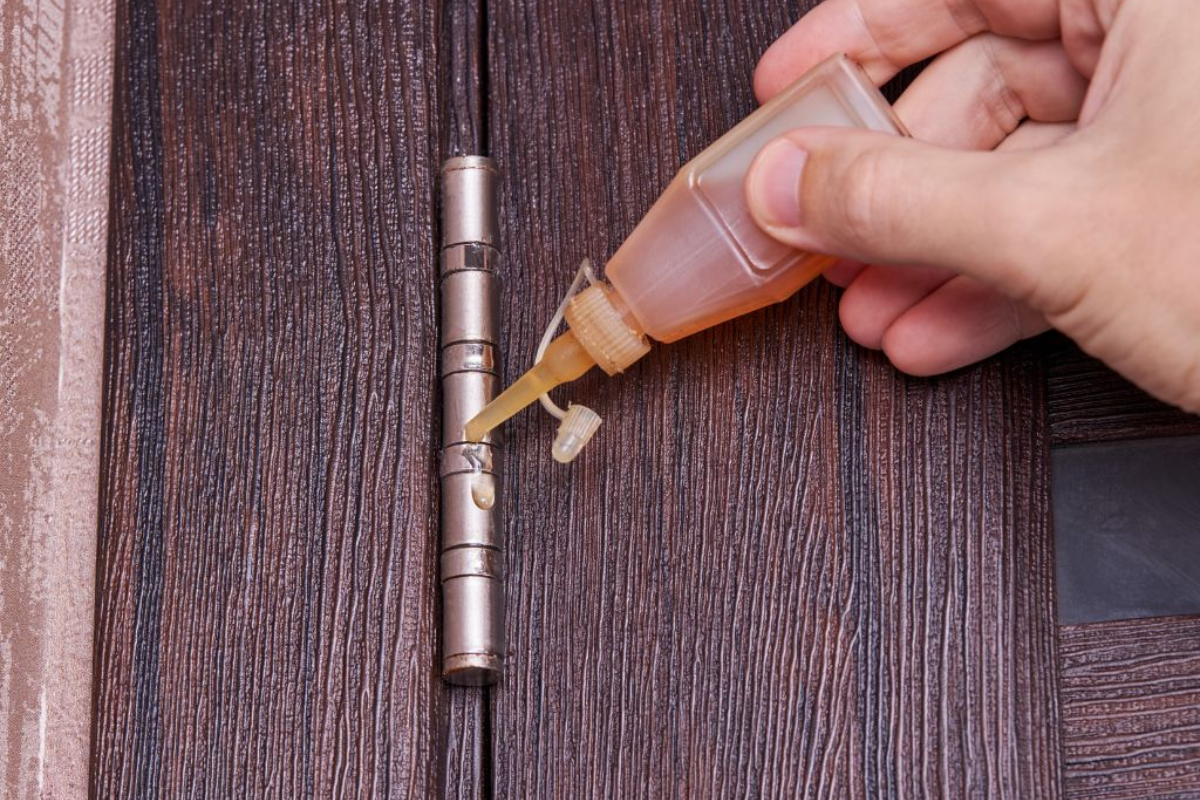
Apply a small amount of lubricant around the hinge joints and near the top of the hinge pin. Open and close the door several times to spread the product through the hinge.
Listen again. If the squeak becomes quieter but does not disappear, apply one more small amount. Avoid soaking the hinge.
Wipe away excess lubricant immediately. Too much oil can run down the door, damage painted surfaces, attract dust, or make the floor slippery. If the noise returns soon afterward, the hinge pin may need deeper cleaning.
How to Lubricate Door Hinges Correctly?
Apply lubricant to the narrow gaps where the hinge sections rotate around the pin. A spray product with a thin straw allows you to reach these areas without covering the door, trim, or wall.
Start with the top hinge and work downward. Use only a small amount on each hinge, then move the door back and forth several times. This movement helps the lubricant coat the internal metal surfaces.
Hold a cloth behind and below the hinge while spraying. It will catch overspray and prevent stains on nearby paint or flooring.
Adding a large amount does not make the repair last longer. A small, controlled application is cleaner and normally works better.
Best Lubricants for Squeaky Door Hinges
Silicone spray is suitable for many interior and exterior hinges. It reaches small spaces, reduces friction, and usually leaves less sticky residue than heavy oils. It also performs well in areas exposed to moisture.
White lithium grease creates a thicker and longer-lasting layer. It can be useful for heavily used doors and exterior hinges. However, it may leave visible white residue, so it should be applied carefully.
Multipurpose household oil, such as light machine oil, is a practical choice for interior doors. A few drops can quickly reach the hinge pin and quiet the movement.
A penetrating lubricant can help loosen a rusty or stuck hinge. However, some penetrating products are better for cleaning and loosening than for providing long-term lubrication.
Petroleum jelly can also reduce friction, especially when applied directly to a partially removed hinge pin. It is useful as a temporary household solution, although silicone spray or white lithium grease may last longer.
How to Fix a Squeaky Door Without WD-40?
You do not need WD-40 to repair every squeaky door. Silicone spray is a clean and effective alternative for most household hinges. White lithium grease is helpful when a thicker, weather-resistant coating is needed.
A light multipurpose household oil can also work well on an interior door. Apply only a few drops and move the door several times to spread it.
Petroleum jelly may be used when no spray lubricant is available. Candle wax or dry bar soap can sometimes reduce friction temporarily, but they usually work best when applied directly to the hinge pin.
Avoid using olive oil, vegetable oil, or other cooking oils. They may stop the noise briefly, but they can become sticky, collect dirt, develop an unpleasant smell, and make the hinge harder to clean later.
Fixing a Squeaky Hinge Without Removing the Pin
In many cases, you can fix a squeaky door hinge without removing the pin. Clean the visible surface first, then apply lubricant along the joints where the hinge sections meet.
Add a small amount around the top of the pin. Open and close the door through its full range several times so the lubricant can move deeper into the hinge.
Wipe the surface clean and listen again. You may repeat the application once if necessary.
If the squeak continues after two careful attempts, dirt, rust, or dried grease may be trapped inside the hinge. Removing and cleaning the pin will usually provide a better result.
Removing and Cleaning a Squeaky Door Hinge Pin
Open the door and support its weight with a doorstop, folded cardboard, or a wooden block. Never remove all hinge pins at the same time because the door may shift or fall.
Place a nail, metal punch, or hinge-pin tool against the bottom of the pin. Tap it gently upward with a small hammer. When the head rises, pull the pin out with your fingers or pliers.
Wipe the pin with a clean cloth. Use fine steel wool or fine-grit sandpaper to remove light rust, old grease, and rough buildup. Do not sand aggressively because changing the shape of the pin may affect how the hinge moves.
Roll the pin across a flat surface. If it wobbles, it may be bent and should be replaced.
Apply a thin coating of lubricant to the clean pin. Slide it back into the hinge and tap it down gently. Open and close the door several times before wiping away any excess product.
Repairing Rusty or Dirty Door Hinges
Rust and built-up dirt can cause squeaking even after lubricant has been applied. Remove the hinge pin and clean it carefully. Wipe the hinge plates and visible joints to remove loose dirt.
Fine steel wool or sandpaper can be used on light surface rust. Work gently to avoid damaging the metal finish. After cleaning, remove all dust and apply fresh lubricant.
If rust has created deep pits, cracks, or serious weakness, replace the hinge. Severely damaged hardware is unlikely to provide a smooth or reliable repair.
Bathroom, laundry-room, and exterior hinges may rust more quickly because of moisture. Check these areas regularly and deal with early rust before it spreads.
Tightening Loose Door Hinge Screws
Loose screws allow hinge plates to move against the door or frame. This movement can cause squeaking, clicking, sagging, and rubbing.
Check every screw on both sides of each hinge. Tighten them with the correct screwdriver, but stop when they are secure. Over-tightening can strip the hole or damage the screw head.
Replace missing, rusty, or damaged screws. If a screw turns without becoming tight, the hole may be worn. A slightly longer screw of the correct thickness may reach solid wood behind the frame and hold more securely.
Test the door after tightening the screws. In some cases, this simple repair will stop both the squeak and uneven movement.
Correcting Door and Hinge Misalignment
Look at the spaces around the door while it is closed. The gaps should appear reasonably even. A narrow gap near the top and a wider gap near the bottom may indicate that the door is sagging.
Begin by tightening the top hinge because it carries much of the door’s weight. A longer screw in the top hinge may help pull the door back toward the frame.
Check whether the hinge plates are bent or installed unevenly. Damaged hinges may need replacement, while incorrectly positioned hinges may require adjustment.
Also inspect the top, side, and bottom edges for rubbing. Correcting the alignment can stop the noise and prevent further damage to the door, frame, and hardware.
What to Do When the Door Still Squeaks After Lubrication?
If the door still squeaks, listen again to confirm which part is making the sound. Remove and clean the suspected hinge pin, then inspect it for rust, bends, rough patches, or wear.
Check the hinge plates for cracks or excessive movement. Tighten all screws and look for signs that the door is sagging or rubbing.
Test the latch and strike plate as well. A dry latch or a latch rubbing against the strike plate can sometimes sound like a noisy hinge.
If the sound repeatedly returns after proper cleaning, lubrication, and tightening, the internal hinge parts may be worn. Replacing the hinge is normally the most reliable solution.
When to Replace a Squeaky Door Hinge?
Replace a hinge when its plates are cracked, badly bent, severely rusted, or loose around the hinge pin. A bent or deeply corroded pin should also be replaced.
Excessive side-to-side movement is another warning sign. A working hinge should rotate smoothly without allowing the door to shake or drop.
Choose a replacement that matches the old hinge’s size, corner shape, screw pattern, weight rating, and finish. Change one hinge at a time so the remaining hardware continues to support the door.
Fixing Squeaky Interior and Exterior Doors
Interior doors normally respond well to silicone spray, light household oil, or white lithium grease. Because they are protected from rain and major temperature changes, they may need only occasional maintenance.
Exterior doors require products that resist moisture and changing weather. Silicone spray and white lithium grease are often more suitable than thin household oils.
Bathroom and laundry-room doors also face higher humidity. Keep their hinges dry and treat early signs of rust.
Exterior wooden doors may expand or contract as weather conditions change. If lubrication does not solve the problem, check whether the door has shifted and started rubbing against the frame.
Common Mistakes to Avoid
Do not flood a hinge with lubricant. Excess product attracts dirt, causes stains, and creates unnecessary mess.
Avoid repeatedly adding oil without checking the screws and alignment. Lubrication cannot repair a loose, bent, or badly worn hinge.
Do not use cooking oil as a permanent solution. It may become sticky and trap dirt.
Never remove all hinge pins at once, especially from a heavy door. Support the door properly and work on one hinge at a time.
Do not hammer a stubborn pin aggressively. Strong blows can bend the pin, damage the hinge, or mark the surrounding paint.
Finally, do not keep treating a badly corroded or cracked hinge. Replacement is safer and more effective.
Keeping Door Hinges Quiet in the Future
Clean hinges during regular household maintenance. Removing dust before it enters the moving parts can reduce friction and wear.
Tighten loose screws as soon as the door begins to move unevenly. Lubricate hinges when they feel stiff or start making a faint sound rather than waiting for the noise to become severe.
Check exterior and high-moisture doors more often. Protecting their hinges from water can slow rust and extend the life of the hardware.
Do not ignore sagging, scraping, or uneven gaps. Early alignment repairs can prevent damage to the hinges, door, and frame.
Conclusion: A Quiet Door Starts with the Right Fix
Understanding how to fix squeaky door problems begins with finding the true source of the noise. A dry hinge may need only a small amount of lubricant, while a dirty or rusty hinge may require pin removal and cleaning. Loose screws should be tightened, and a sagging or rubbing door may need alignment work.
Use a suitable lubricant, apply it carefully, and avoid household products that leave sticky residue. When a hinge is badly bent, cracked, corroded, or worn, replacement is usually better than another temporary repair.
With proper cleaning, lubrication, tightening, and occasional maintenance, most doors can open and close quietly for years.
FAQs
What is the best lubricant for a squeaky door?
Silicone spray is a clean and versatile choice. White lithium grease often provides longer-lasting protection for heavily used or exterior hinges. Light household oil works well for many interior doors.
Can WD-40 be used on door hinges?
WD-40 can help loosen dirt, moisture, and rusty parts, and it may stop a squeak quickly. A longer-lasting hinge lubricant may still be needed after the hinge has been cleaned.
How can a squeaky door be fixed without removing the hinge pin?
Clean the hinge, apply a small amount of lubricant around the moving joints, and open and close the door several times. Remove the pin only if the sound continues.
Why does a door still squeak after being oiled?
The hinge may contain rust or dirt, or it may have a bent pin, loose screws, worn parts, or poor alignment. The sound may also come from the latch or the door rubbing against the frame.
Can petroleum jelly stop a door from squeaking?
Yes. Petroleum jelly can reduce friction when applied to the hinge joints or directly to a partially removed pin. However, it may not last as long as a dedicated hinge lubricant.
How often should door hinges be lubricated?
There is no fixed schedule for every door. Lubricate hinges when they begin to feel stiff, make noise, or show early signs of rust. Exterior and frequently used doors may need attention more often.
Can loose screws cause a door to squeak?
Yes. Loose screws allow the hinge plates and door to move slightly, which can create friction, clicking, squeaking, and alignment problems.
When should a squeaky hinge be replaced?
Replace it when it is cracked, bent, badly rusted, loose around the pin, or still noisy after proper cleaning, tightening, and lubrication.
