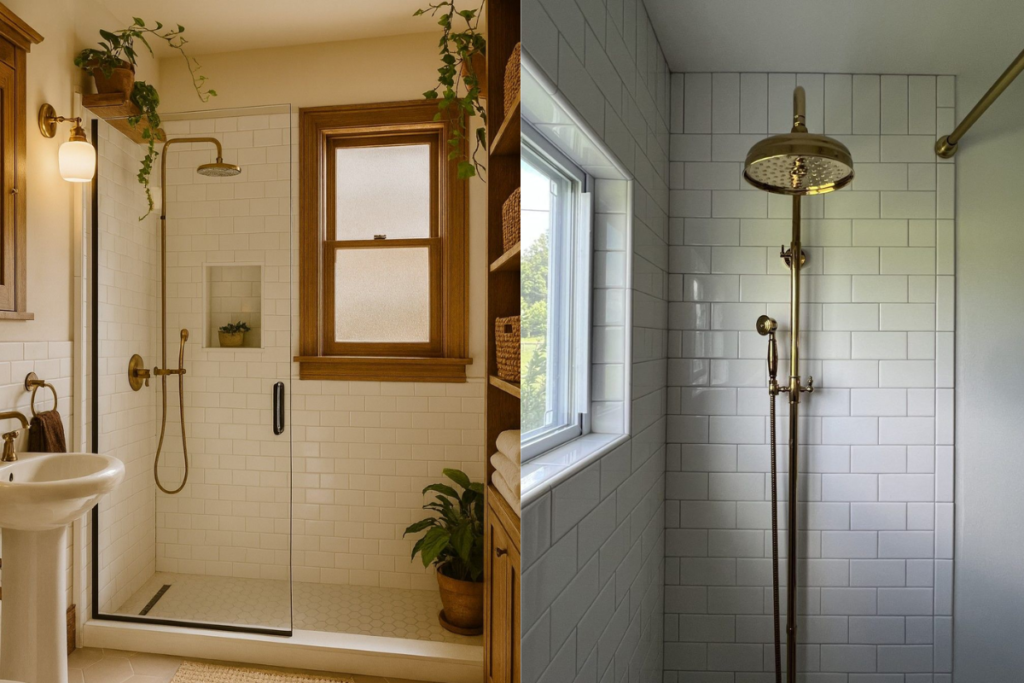
A window in shower area is a window placed inside the shower enclosure, above a bathtub-shower combination, or on a wall that receives regular water and steam. It can bring daylight and fresh air into the bathroom, but it also requires more careful planning than an ordinary bathroom window.
Many older homes have a window inside the shower because the bathroom layout existed before modern shower enclosures became common. In newer homes, a shower window may be added intentionally to brighten the room, improve ventilation, or create a more open design.
The main concerns are water exposure, privacy, safety, and long-term maintenance. Water can collect around the frame, sill, corners, and tile edges. If these areas are not waterproofed correctly, moisture may reach the wall structure and cause mold, stains, swelling, or wood rot.
Homeowners should therefore evaluate the window material, glass type, location, waterproofing system, privacy level, and overall condition before keeping or installing one. A well-designed shower window can be useful and attractive, but a poorly installed one may become a repeated source of leaks.
Why Homeowners Choose a Window in the Shower?
Natural light is one of the main reasons people choose a window in the shower. Daylight can make the shower feel brighter and more comfortable, especially in bathrooms that do not have much artificial lighting.
An operable window may also allow humid air to leave the room. However, opening a window should not always be treated as a complete replacement for proper bathroom ventilation. Local building requirements may call for mechanical exhaust, and bathroom air should be directed outdoors rather than into an attic or another indoor area.
A window can also make a small bathroom feel larger. Natural light, an outdoor view, and a brighter wall surface can reduce the closed-in feeling that is common in compact showers.
However, a shower window may create problems when it sits directly under the showerhead, has a wooden frame, lacks safety glass, or includes a flat sill that holds water. Privacy can also become a concern when the window faces a neighbor, street, or nearby building.
Benefits and Drawbacks of a Window in Shower Areas
Main Benefits
A shower window can create a brighter and more pleasant shower space. During the daytime, homeowners may need less artificial lighting, which can make the room feel more natural.
An operable window may improve airflow, while a fixed window can provide light without adding tracks, hinges, or openings that collect water. A carefully placed window may also become a strong design feature, especially when it frames a private garden, trees, or open sky.
Possible Drawbacks
Privacy is often the first concern. Clear glass may allow people outside to see into the bathroom, particularly at night when the indoor lights are on.
Water leakage is another risk. Tile and grout alone do not create a complete waterproof barrier. A shower needs an approved waterproofing layer behind or directly under the finished tile surface. Waterproof membranes are designed to protect shower walls and other tiled areas from moisture.
Shower windows may also require more cleaning because water spots, soap residue, and mineral deposits can collect on the glass, frame, sill, and window tracks. Some common window coverings are unsuitable because fabric, untreated wood, and metal parts may absorb moisture or corrode.
Best Window Types for a Shower
Fixed Windows
A fixed window does not open. Its simple construction means it has fewer moving parts, joints, and tracks where water can collect. It is often a practical choice when the bathroom already has a reliable exhaust fan.
Awning Windows
An awning window opens outward from the bottom and is hinged at the top. It may allow some ventilation while helping reduce direct water entry. However, the operating hardware still needs protection from constant spray and humidity.
Casement Windows
Casement windows are hinged on one side and open outward. They can provide good airflow, but their handles, hinges, and seals require regular cleaning and inspection in wet areas.
Clerestory Windows
A clerestory window is placed high on the wall. This location can offer natural light while improving privacy and reducing direct exposure to shower spray.
Transom Windows
A transom window is a narrow window installed high above the shower or bathtub. It works well when the main goal is light rather than a full outdoor view.
Glass Block Windows
Glass blocks provide privacy while allowing light to pass through. They do not offer a clear view and are usually fixed, so a separate ventilation method may still be needed.
Choosing Between an Operable and Non-Opening Window
An operable window can provide airflow but has more seals, tracks, and hardware to maintain. A fixed window is usually easier to waterproof and clean. The best choice depends on the bathroom’s ventilation, layout, privacy needs, and level of water exposure.
Best Materials for a Shower Window
Vinyl Window Frames
Vinyl is commonly considered for wet areas because it does not rot like untreated wood. It is also relatively easy to clean. The frame must still be installed and sealed correctly because water can leak around any window material.
Fiberglass Window Frames
Fiberglass is strong, stable, and resistant to moisture. It can be a suitable long-term option when the manufacturer approves the product for the intended environment.
Aluminum Window Frames
Aluminum does not rot, but it may develop condensation and can feel cold in certain climates. Finishes and fasteners should be suitable for humid conditions.
Why Traditional Wood Frames Require Extra Protection?
Wood can absorb moisture when its paint, coating, or sealant fails. Repeated wetting may cause swelling, peeling, discoloration, and rot. An older wooden frame inside a shower should be inspected carefully before being covered with new trim or tile.
Moisture-Resistant Trim and Finishing Materials
Trim around the window should be suitable for a wet area. Common options include tile, stone, solid-surface material, PVC, or other nonabsorbent products approved for shower use. Ordinary interior wood trim and medium-density fiberboard are poor choices where they receive frequent water.
Window in Shower Privacy Solutions
Frosted or Obscure Glass
Frosted or textured glass provides a permanent privacy solution while allowing natural light into the shower. It is usually more reliable than a covering that must be opened, closed, cleaned, or replaced.
Privacy Window Film
Privacy film can be a lower-cost option for existing glass. The product should be designed for humid locations, and its edges must be applied carefully. Some films may peel when exposed to frequent moisture, cleaning products, or high temperatures.
Glass Blocks
Glass blocks offer built-in privacy and do not require curtains or blinds. The level of privacy depends on the block pattern and lighting conditions.
Waterproof Blinds and Shutters
PVC shutters or moisture-resistant blinds may work in some bathrooms, but they add joints and surfaces that require cleaning. The manufacturer should clearly state that the product is suitable for wet or high-humidity areas.
Shower Curtains and Removable Covers
A small curtain can provide privacy, although fabric may remain damp and develop mildew. A quick-drying, washable material is preferable to ordinary decorative fabric.
Using Window Placement to Improve Privacy
Installing the window higher on the wall is one of the simplest privacy solutions. A clerestory or transom window can admit daylight without providing a direct view into the shower.
Comparing Permanent and Temporary Privacy Options
Frosted glass, obscure glass, and glass blocks provide permanent privacy. Film, curtains, shutters, and blinds are easier to change but require more maintenance. The right option depends on budget, window condition, desired light, and the view outside.
How to Waterproof a Window in a Shower?
Waterproofing must protect the entire opening, not only the visible caulk line. A continuous waterproof layer should connect the shower wall system to the window opening, including the sill, sides, top, and corners.
Sheet-applied waterproof membranes are commonly used behind tile in shower assemblies. Their purpose is to stop water from reaching the wall structure. Manufacturer installation instructions must be followed, especially at seams, corners, and transitions.
The window frame should be sealed to the surrounding waterproof system with compatible materials. Corners and joints need special attention because they are common leakage points.
Caulk is useful for movement joints and the final connection between materials, but it should not be treated as the only waterproofing method. A thick bead of sealant cannot correct missing membrane, damaged framing, or an incorrectly sloped sill.
The sill should direct water back toward the shower. Water should not be allowed to sit against the frame or travel into the wall.
Warning signs of failed waterproofing include loose tile, soft drywall, peeling paint outside the shower, dark stains, musty odors, cracked sealant, swollen trim, and recurring mold around the window.
Designing a Waterproof Shower Window Sill
A shower window sill should slope slightly toward the shower so water drains away from the frame. A flat sill can hold water after every shower, increasing the chance of staining, mold, and leakage.
Suitable sill materials include tile, stone, quartz, and solid-surface products. The material should resist water and be installed over a complete waterproofing system.
Large solid pieces may create fewer grout joints than small tiles, but they still need correct support, slope, and sealing. The sill, side jambs, and lower corners must connect to the wall waterproofing without gaps.
Tiling Around a Window in the Shower
Before tiling begins, the window area should be inspected for damaged framing, loose material, and signs of previous leaks. Covering existing damage with tile will not solve the underlying problem.
The waterproof membrane should continue from the shower wall into the window opening. The sill, jambs, header, corners, and seams should all be included.
Tile edges can be finished with metal profiles, stone returns, bullnose tile, or other moisture-resistant trim. The chosen finish should protect exposed edges and create a clean transition around the frame.
Common mistakes include placing tile directly over moisture-sensitive material, leaving gaps behind the trim, failing to slope the sill, and relying only on grout or caulk for waterproofing.
Safety Glass and Shower Window Placement
Glass close to a bathtub or shower may be considered a hazardous location under residential building rules. For example, the International Residential Code identifies certain glazing next to showers and bathtubs when the bottom exposed edge is less than 60 inches above the standing or walking surface. Such locations may require approved safety glazing.
Requirements vary by jurisdiction, adopted code edition, window size, height, and exact placement. Homeowners should confirm the local rules rather than assuming that ordinary glass is acceptable.
Placing the window higher on the wall can improve privacy and reduce direct spray. When possible, it should also be located away from the showerhead.
A qualified window installer, tile professional, contractor, or local building official should be consulted when structural changes, safety glass, permits, or extensive waterproofing are involved.
Keeping an Existing Window During a Shower Remodel
An existing window may be worth keeping when its frame is sound, the glass is safe, the placement works well, and the opening can be waterproofed correctly.
Begin by inspecting the frame, sill, wall, and surrounding trim. Look for soft wood, dark staining, peeling finishes, loose tiles, cracked joints, mold, or damp smells.
A wooden window may sometimes be repaired, but repeated water exposure makes long-term protection difficult. Simply painting damaged wood or covering it with plastic trim may hide the problem rather than solve it.
Keeping the window makes sense when it provides useful light or ventilation and can be safely integrated into the new shower system without compromising waterproofing.
Replacing a Window Inside a Shower
Replacement may be necessary when the frame is rotten, the glass is unsafe, seals have failed, or the current design cannot be waterproofed properly.
A moisture-resistant replacement window with simple details is often easier to maintain. Fixed vinyl or fiberglass units are commonly considered because they do not contain exposed interior wood.
A regular window can also be replaced with glass block when privacy is the main goal. Other possibilities include reducing the window size, moving it higher, or closing the opening completely.
Replacement costs depend on the window size, material, glass, exterior access, wall construction, tile work, waterproofing repairs, labor rates, and whether structural changes or permits are needed. It is better to request a detailed local estimate than rely on a single national price.
Window in Shower Design Ideas
A small high window is useful when privacy matters more than the outdoor view. A horizontal window above the shower can spread daylight across the room without sitting directly in the water stream.
Large windows can work in homes with private gardens, enclosed courtyards, or distant views. Privacy glass or exterior screening may still be needed.
Walk-in showers can use narrow vertical windows, corner windows, or high clerestory designs. Bathtub-shower combinations often benefit from a transom window above the wettest area.
Modern designs usually keep the frame, tile edges, and trim simple. Fewer ledges, tracks, and decorative joints can make cleaning easier and reduce places where water collects.
Preventing Mold, Leaks, and Water Damage
Dry the frame and sill when water remains after showering. A small squeegee or cloth can reduce water spots and prevent moisture from sitting in corners.
Inspect caulk and flexible sealant regularly. Replace damaged material after determining why it failed. Sealant that repeatedly cracks may indicate movement, poor preparation, or water behind the surface.
Clean window tracks and drainage openings so they do not become blocked by soap residue or dirt. Use bathroom ventilation during and after showering to remove moisture.
Condensation can indicate high indoor humidity, cold surfaces, or weak ventilation. Persistent moisture should be investigated rather than treated as a normal condition.
Common Window in Shower Mistakes
The most common errors include:
- Installing a moisture-sensitive frame
- Using ordinary interior wood trim
- Leaving the sill flat
- Treating caulk as the entire waterproofing system
- Ignoring safety-glass requirements
- Installing non-waterproof curtains or blinds
- Allowing water to collect in tracks and corners
These mistakes may not cause immediate damage, but repeated exposure can gradually weaken finishes and hidden building materials.
Choosing the Right Window in Shower Setup
Before making a decision, consider whether the window receives direct spray, provides enough privacy, has a wet-area-friendly frame, and can connect to a complete waterproofing system.
Also decide whether the window truly needs to open. A fixed window may be simpler when a good exhaust fan already serves the bathroom.
New construction offers the most flexibility because the window size, height, glass, and waterproofing can be planned together. A full shower renovation may allow an old window to be reduced, raised, or replaced.
A smaller project may involve privacy film, obscure glass, new sealant, or moisture-resistant trim. However, surface improvements should only be used when the underlying frame and waterproofing are already sound.
Conclusion: Creating a Safe and Practical Window in Shower Design
A window in shower design can bring valuable daylight, airflow, and visual interest into a bathroom. Its success depends on more than appearance, however. The glass, frame, sill, trim, placement, and surrounding wall all need to work together.
Privacy can be improved with obscure glass, film, glass blocks, shutters, or higher placement. Moisture damage can be reduced through a continuous waterproofing system, a correctly sloped sill, suitable materials, and regular maintenance.
Every bathroom is different. An existing window may only need minor improvements, while another may require complete replacement or removal. The safest approach is to prioritize proper installation, local code compliance, and long-term moisture protection instead of relying on temporary surface repairs.
FAQs
Is It Safe to Have a Window in a Shower?
Yes, when the window uses suitable glass, moisture-resistant materials, proper waterproofing, and safe placement. Local building requirements should also be checked.
What Is the Best Type of Window for a Shower?
A fixed vinyl or fiberglass window is often a practical option because it has fewer moving parts. The best type depends on ventilation, privacy, water exposure, and local requirements.
How Do You Waterproof a Window Inside a Shower?
Use a continuous shower waterproofing system around the sill, sides, top, and corners. The sill must slope toward the shower, and compatible sealant should finish the connection to the frame.
Does a Shower Window Need Tempered Glass?
It may require approved safety glazing depending on its height, size, and distance from the shower or bathtub. Confirm the rule with the local building authority.
Can Privacy Film Be Used on a Shower Window?
Yes, provided it is suitable for humid conditions. Its edges should be checked regularly for lifting or water damage.
Can You Tile Around a Window in a Shower?
Yes. The opening must be properly supported and waterproofed before tile is installed.
Should a Shower Window Open?
It may open for ventilation, but operable windows have more tracks and hardware to maintain. A fixed window is simpler when mechanical ventilation is available.
How Can You Stop a Shower Window From Leaking?
First identify the source. Repairing surface caulk alone may not solve leaks caused by failed waterproofing, damaged framing, or poor sill slope.
Should You Replace a Wooden Window in a Shower?
Replacement is often worth considering when the wood is soft, swollen, cracked, or repeatedly damp. Sound wood may sometimes be retained with professional waterproofing and protection.
Is Glass Block a Good Choice for a Shower Window?
Glass block can provide light and privacy with little visible framing. It is normally fixed, so separate bathroom ventilation may be required.
Should You Keep or Remove a Window During a Shower Remodel?
Keep it when it is structurally sound, useful, safe, and possible to waterproof. Remove or replace it when it creates ongoing privacy, leakage, or maintenance problems.