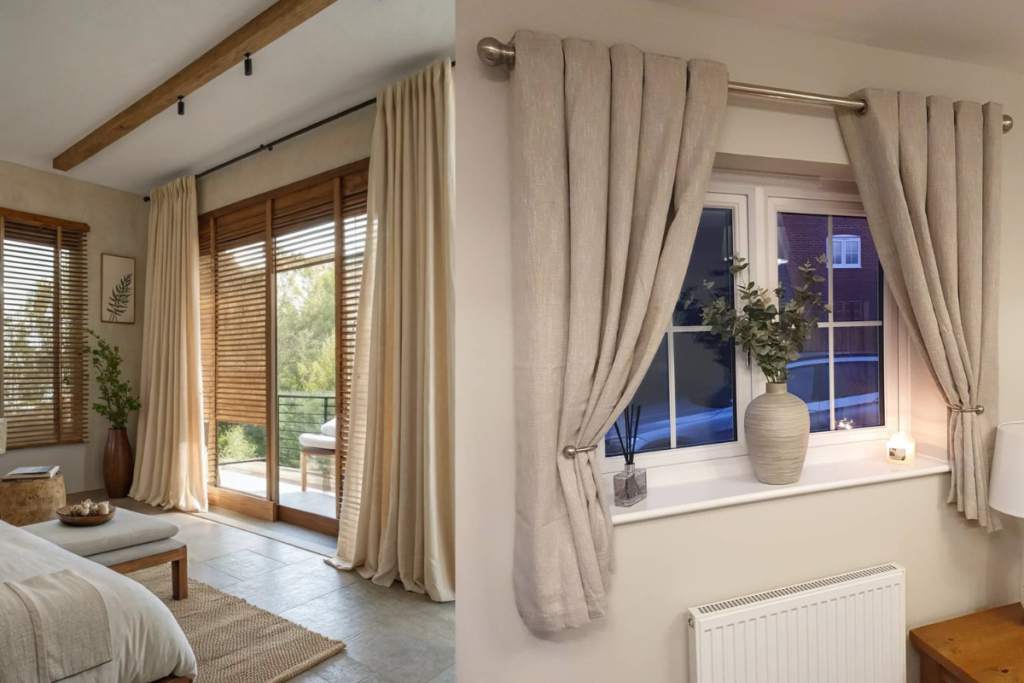
Choosing the right window treatment can completely change the look and feel of a room. While blinds have long been a popular choice for their practicality, many homeowners are now pairing them with curtains to create a more attractive and functional space. This design approach, known as curtains over blinds, combines the clean appearance of blinds with the warmth and elegance of fabric curtains.
Layering these two window treatments offers more than just visual appeal. It provides better light control, improved privacy, added insulation, and greater flexibility in decorating different rooms. Whether your home has a modern, traditional, or contemporary style, curtains over blinds can help create a polished and inviting atmosphere.
In this guide, you’ll learn how this layered window treatment works, why it has become so popular, which types of blinds pair best with curtains, and how to choose the perfect combination for your home.
Understanding the Curtains Over Blinds Design Concept
The idea behind curtains over blinds is simple. Instead of choosing only one type of window covering, both are installed together to serve different purposes. Blinds are usually mounted inside or close to the window frame, while curtains are hung on a rod above the window and extend down the sides.
This layered design allows each window treatment to perform its own role. Blinds provide precise control over sunlight and privacy throughout the day. Curtains soften the appearance of the room, add texture, introduce color, and create a finished decorative look.
Because both treatments work together, homeowners do not have to sacrifice style for function. The result is a window that looks more complete while offering practical everyday benefits.
Why Homeowners Choose Curtains Over Blinds?
Many people choose curtains over blinds because they want their windows to look more inviting without giving up the convenience of blinds. Blinds alone can sometimes appear plain, especially in larger rooms where windows become a major design feature. Curtains add warmth and personality while making the entire space feel more comfortable.
Another reason for their popularity is flexibility. During the day, blinds can filter sunlight while curtains remain open to frame the window. At night, closing both layers increases privacy and helps reduce outside light.
Layering window treatments can also improve energy efficiency. Curtains help reduce heat loss during colder months and block excessive sunlight during summer, making indoor temperatures more comfortable throughout the year.
The Biggest Benefits of Layering Curtains and Blinds
One of the greatest advantages of curtains over blinds is improved light control. Blinds allow you to adjust the amount of natural light entering the room, while curtains provide another layer when you need additional shade or complete darkness.
Privacy is another important benefit. Blinds offer excellent daytime privacy, but adding curtains creates an extra barrier that makes rooms feel even more secure, especially in bedrooms and living areas.
Layered window treatments can also improve insulation. Thick curtain fabrics help reduce heat transfer through windows, making heating and cooling systems work more efficiently. This can contribute to lower energy costs over time.
From a design perspective, curtains soften the hard lines created by blinds. They introduce texture, color, and movement that make windows appear larger and rooms feel more welcoming. Even simple blinds can look much more elegant when paired with carefully selected curtains.
Situations Where Curtains Over Blinds Work Best
Curtains over blinds work well in almost every room, but they are especially useful where both style and function are equally important.
Large windows benefit greatly from layered treatments because curtains help balance the scale of the room while blinds provide practical light control.
Bedrooms are another excellent location. Combining blackout curtains with quality blinds creates a darker sleeping environment while allowing natural light to be adjusted throughout the day.
Living rooms often become more comfortable with layered window coverings because homeowners can enjoy natural daylight without sacrificing privacy. Curtains also make entertaining spaces feel warmer and more refined.
Home offices can benefit as well. Blinds help reduce glare on computer screens, while curtains create a quieter and more comfortable work environment.
Choosing the Right Type of Blinds for Layering
Not every blind looks the same with curtains. Choosing the right style helps create a balanced and attractive appearance.
Roller Blinds
Roller blinds are one of the easiest options to pair with curtains because of their clean and simple design. Their minimal appearance allows decorative curtains to become the main visual feature without making the window feel crowded.
They are available in light-filtering and blackout materials, making them suitable for nearly every room in the home.
Venetian Blinds
Venetian blinds remain a popular choice because their adjustable horizontal slats provide excellent control over natural light. Whether made from wood, aluminum, or faux wood, they pair beautifully with curtains in both traditional and modern interiors.
When combined with soft fabric curtains, Venetian blinds create a balanced mix of structure and elegance.
Roman Blinds
Roman blinds already offer a softer appearance than many other blind styles because of their folded fabric design. When layered with curtains, they create a luxurious and sophisticated look that works especially well in bedrooms, dining rooms, and formal living spaces.
Choosing complementary fabrics allows both treatments to blend together without competing for attention.
Vertical Blinds
Vertical blinds are commonly used on large windows and sliding glass doors. While they are extremely practical, they can sometimes look too functional on their own.
Adding full-length curtains helps soften their appearance while maintaining easy access to the window or door. This combination works particularly well in family rooms and patio entrances.
Cellular (Honeycomb) Blinds
Cellular blinds, also called honeycomb blinds, are designed to improve insulation by trapping air inside their unique structure. They are an excellent choice for homeowners who want greater energy efficiency without sacrificing style.
When paired with curtains, they provide outstanding temperature control while creating a layered, comfortable appearance that suits both modern and classic interiors.
Selecting Curtains That Complement Your Blinds
Choosing the right curtains is just as important as selecting the blinds themselves. The goal is to create a balanced look where both window treatments work together instead of competing with each other.
Fabric Choices
Fabric plays a major role in the overall appearance of layered window treatments. Linen and cotton create a relaxed, casual atmosphere, making them ideal for living rooms and family spaces. Velvet, heavier woven fabrics, and textured materials add a more luxurious feel, making them popular choices for bedrooms and formal areas.
Lightweight fabrics allow more natural light to enter the room, while heavier materials improve insulation and privacy.
Length and Fullness
Curtain length has a significant impact on the final appearance. In most homes, floor-length curtains create the most elegant look because they make windows appear taller and rooms feel more spacious.
The fullness of the curtains also matters. Curtains that are slightly wider than the window create gentle folds, giving the room a softer and more finished appearance without looking overly bulky.
Color and Pattern Coordination
The best layered window treatments use colors that complement each other rather than compete. Neutral blinds pair well with both solid-colored and patterned curtains, giving homeowners more decorating freedom.
If the curtains feature bold prints or rich colors, choosing simple blinds helps maintain visual balance. Likewise, decorative blinds often work best with plain curtains that allow the window design to remain cohesive.
Blackout vs. Sheer Curtains
The choice between blackout and sheer curtains depends on how the room is used. Blackout curtains are ideal for bedrooms, nurseries, and media rooms because they block most outside light and provide excellent privacy. They also help regulate indoor temperatures by reducing heat transfer through windows.
Sheer curtains, on the other hand, create a bright and airy atmosphere. They gently filter sunlight while maintaining a sense of openness, making them perfect for living rooms, dining areas, and spaces where natural light is welcome. Many homeowners even combine sheer and blackout curtains with blinds to enjoy maximum flexibility throughout the day.
How to Match Curtains and Blinds Without Clashing?
Creating a balanced design starts with choosing window treatments that complement one another instead of competing for attention. If your blinds have a bold texture or wood grain, selecting simple curtains allows the blinds to remain a subtle feature. Likewise, if your curtains include patterns or vibrant colors, neutral blinds help maintain a clean and coordinated appearance.
Color coordination is equally important. Matching the curtains with your wall color creates a seamless look, while selecting a shade that complements your furniture or accessories helps tie the room together. The curtain rod and other hardware should also match the finishes used throughout the room for a polished result.
Keeping the overall style consistent ensures that the layered window treatment enhances the room rather than overwhelming it.
Measuring and Hanging Curtains Over Blinds Correctly
Proper installation plays a major role in how attractive curtains over blinds will look. Even high-quality materials can appear unfinished if they are measured or installed incorrectly.
Curtain Rod Placement
The curtain rod should be mounted several inches above the window frame rather than directly on top of it. Hanging the rod higher creates the illusion of taller ceilings and larger windows. Extending the rod beyond each side of the window also allows the curtains to stack neatly without blocking natural light when opened.
Curtain Width and Height
Choosing the correct curtain size is just as important as selecting the fabric. Curtains should generally reach the floor for a clean and elegant finish. Their combined width should also be greater than the window itself so they form soft, natural folds instead of hanging flat.
Taking accurate measurements before purchasing curtains helps avoid common sizing mistakes and ensures a professional appearance.
Creating a Balanced Layered Look
A successful layered design feels comfortable rather than crowded. The blinds should remain easy to operate, while the curtains should frame the window without covering unnecessary space. Maintaining proper spacing between the two treatments allows each to serve its purpose while creating a harmonious overall design.
Simple hardware, coordinated colors, and well-proportioned fabrics all contribute to a balanced window treatment that looks stylish for years to come.
Common Design Mistakes to Avoid
Although curtains over blinds are relatively easy to install, a few common mistakes can reduce their overall impact.
One of the most frequent errors is hanging curtains too low. This makes the window appear smaller and the ceiling feel lower than it actually is. Installing the rod higher instantly creates a more spacious appearance.
Choosing curtains that are too short is another common issue. Floor-length curtains generally provide the most elegant finish, while shorter curtains can make the room look unfinished unless they are intentionally designed for smaller windows.
Another mistake is combining too many colors or patterns. Layered window treatments should enhance the room, not become its main distraction. Keeping one element simple while allowing the other to add visual interest creates a more balanced result.
Finally, ignoring the room’s function can lead to disappointment. Bedrooms usually benefit from blackout curtains, while living rooms often look best with lighter fabrics that allow natural light to brighten the space.
Room-by-Room Ideas for Curtains Over Blinds
Different rooms have different lighting needs, so choosing the right combination helps create both comfort and style.
Living Room
The living room is one of the best places to use curtains over blinds. Roller or Venetian blinds paired with full-length linen or textured curtains create a welcoming atmosphere while allowing flexible control over sunlight throughout the day.
Neutral colors work well in most living rooms because they complement changing furniture and seasonal décor without requiring frequent updates.
Bedroom
Bedrooms benefit greatly from layered window treatments. Cellular blinds combined with blackout curtains create a peaceful sleeping environment by reducing outside light and improving insulation. Soft fabrics and calming colors also contribute to a relaxing atmosphere.
Dining Room
Dining rooms often become more elegant when Roman blinds are paired with flowing curtains. This combination adds texture and warmth while maintaining a sophisticated appearance suitable for both everyday meals and special occasions.
Light-filtering fabrics allow natural daylight to create an inviting dining experience without excessive glare.
Home Office
A home office requires a balance between productivity and comfort. Light-filtering blinds help reduce glare on computer screens, while simple curtains soften the room and improve acoustics. Neutral colors create a professional environment that remains pleasant throughout the workday.
Curtains Over Blinds vs. Blinds Alone
Blinds alone offer practical benefits such as privacy, adjustable light control, and easy maintenance. Their clean appearance suits many modern interiors, especially when simplicity is the main design goal.
However, curtains over blinds provide additional advantages that blinds alone cannot achieve. The extra layer improves insulation, enhances privacy, reduces outside noise, and creates a more finished appearance. Curtains also introduce softness, texture, and personality that transform ordinary windows into attractive focal points.
Although layered window treatments require a slightly larger investment, many homeowners consider the added comfort and visual appeal well worth the cost.
How to Keep Layered Window Treatments Looking Their Best?
Proper care helps curtains and blinds maintain their appearance for many years. Dusting blinds regularly prevents dirt from building up, while curtains should be cleaned according to the manufacturer’s care instructions.
Opening and closing both treatments gently reduces unnecessary wear. Checking curtain rods and brackets from time to time also ensures that everything remains securely in place.
Sunlight can gradually fade certain fabrics, so rotating curtains occasionally or using protective linings can help preserve their original color. With regular maintenance, layered window treatments continue to look fresh and attractive while providing reliable performance every day.
Conclusion
Choosing curtains over blinds is an excellent way to combine style with everyday practicality. This layered window treatment offers greater flexibility than using either option alone, allowing homeowners to enjoy improved light control, enhanced privacy, better insulation, and a more polished interior design.
Whether you prefer the clean simplicity of roller blinds, the classic appeal of Venetian blinds, or the energy-saving benefits of cellular blinds, pairing them with carefully selected curtains creates a balanced and inviting look. By choosing suitable fabrics, coordinating colors, and installing everything correctly, you can transform almost any room into a more comfortable and visually appealing space.
Ultimately, curtains over blinds are a smart choice for homeowners who want window treatments that are both beautiful and functional. With thoughtful planning and proper maintenance, this timeless combination can enhance your home’s comfort, style, and value for years to come.