A healthy lawn should have a smooth, even surface that looks attractive and feels comfortable to walk on. Over time, however, lawns can develop bumps, dips, and uneven areas due to weather, soil movement, heavy foot traffic, or natural settling. These imperfections not only affect the appearance of your yard but can also make mowing more difficult and reduce the overall health of your grass.
A lawn leveling rake is a simple yet effective tool designed to spread topdressing materials evenly across the lawn and create a flatter, more uniform surface. Unlike a standard garden rake, it is specially made to glide over the grass while distributing soil, sand, or compost into low spots without damaging healthy turf.
Homeowners, landscapers, and lawn care enthusiasts use a lawn leveling rake because it helps improve both the appearance and condition of a lawn. Whether you’re repairing uneven ground, preparing for overseeding, or simply maintaining a well-kept yard, this tool can make the leveling process much easier and more accurate.
In this guide, you’ll learn what a lawn leveling rake is, how it works, when to use it, how to choose the right one, and the proper steps for leveling your lawn successfully.
What Is a Lawn Leveling Rake?
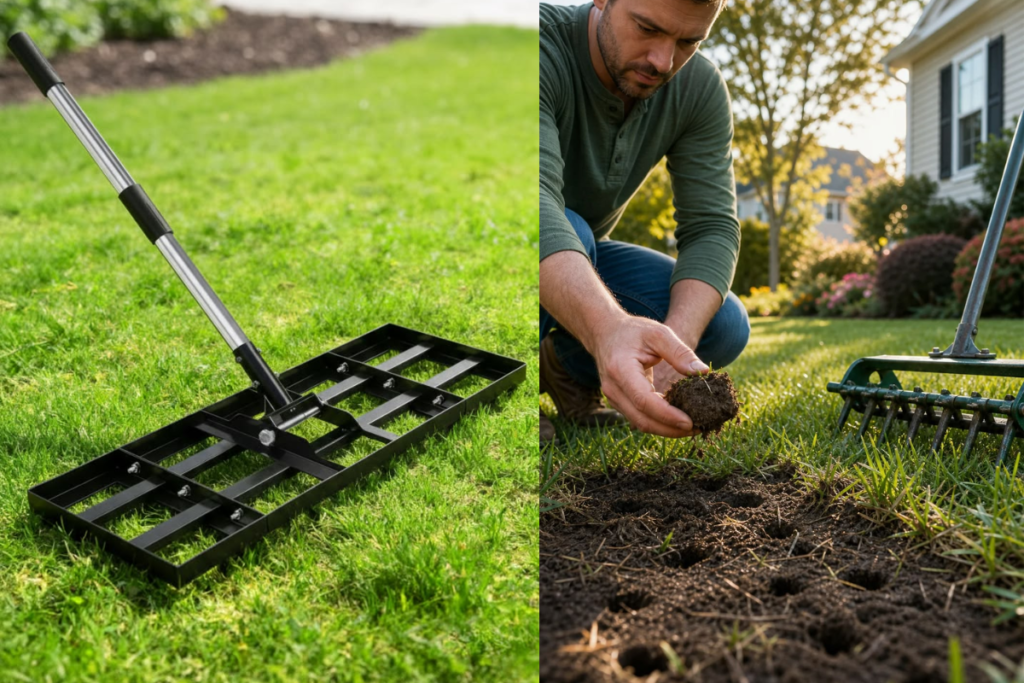
A lawn leveling rake is a specialized lawn care tool designed to spread and smooth topdressing materials across the surface of a lawn. It features a wide, flat head made from a grid or mesh-like design that allows soil, sand, compost, or a mixture of these materials to pass through evenly while breaking up small clumps.
The main purpose of this tool is to create a level lawn by filling shallow depressions and smoothing uneven areas without removing existing grass. It helps distribute topdressing more consistently than many traditional lawn tools, making the leveling process faster and producing more even results.
Unlike tools intended for digging or cultivating soil, a lawn leveling rake is designed to work gently across the lawn surface while preserving healthy grass.
How It Works?
A lawn leveling rake works by dragging a flat leveling head over the lawn after topdressing material has been applied. As the rake moves, the material is spread evenly across the surface and naturally settles into low areas.
The open grid design allows excess material to move freely instead of collecting in one place. This creates a smooth finish while preventing thick piles that could cover or stress the grass.
Repeated passes in different directions help achieve a more uniform surface and improve the overall appearance of the lawn.
What Makes It Different from a Standard Garden Rake?
Although both tools have the word “rake” in their name, they serve very different purposes.
A standard garden rake has individual tines that are designed for collecting leaves, removing debris, loosening soil, or spreading mulch. These tines can dig into the ground and disturb the lawn if used for leveling.
A lawn leveling rake, on the other hand, has a broad, flat base that glides over the grass. Instead of digging into the soil, it evenly distributes topdressing material while preserving the existing turf. This design makes it much better suited for lawn leveling projects.
Common Materials and Design Features
Most lawn leveling rakes are built from durable materials that can withstand regular outdoor use.
Common materials include:
- Stainless steel, which offers excellent resistance to rust and corrosion.
- Powder-coated steel, known for its strength and long-lasting finish.
- Aluminum, which provides a lightweight option that is easier to handle.
Many models also include features such as adjustable handles, reinforced joints, and different head widths to suit various lawn sizes. Some have detachable handles for easier storage, while others feature ergonomic grips that improve comfort during extended use.
Choosing a well-built lawn leveling rake ensures smoother operation and better long-term durability.
What Is a Lawn Leveling Rake Used For?
A lawn leveling rake serves several important purposes beyond simply making a lawn look better. It helps create an even surface that supports healthier grass growth while improving the overall usability of the yard.
Whether you’re repairing damage after winter, preparing your lawn for new seed, or correcting uneven ground caused by natural settling, this tool allows topdressing materials to be spread consistently across the lawn.
Proper leveling can also improve mowing results by reducing scalping, where mower blades cut grass too short on raised areas.
Leveling Uneven Lawns
One of the primary uses of a lawn leveling rake is correcting uneven areas.
Small dips, shallow holes, and minor bumps often develop over time because of rainfall, foot traffic, animal activity, or soil settling. Applying a suitable topdressing mixture and spreading it evenly with a lawn leveling rake gradually restores a smoother lawn surface.
While severe grading problems may require additional work, a lawn leveling rake is highly effective for correcting minor surface irregularities.
Spreading Topdressing Evenly
Topdressing is the process of applying a thin layer of material over an existing lawn.
Common topdressing materials include sand, compost, topsoil, or a carefully balanced mixture of these materials, depending on your lawn’s needs.
A lawn leveling rake distributes these materials evenly, helping prevent thick patches that may block sunlight or slow grass recovery. Even distribution also encourages more consistent soil contact and a healthier growing environment.
Filling Low Spots
Low spots can collect water after rainfall, creating soggy areas that may weaken grass and encourage weed growth.
Using a lawn leveling rake allows topdressing material to settle naturally into these depressions while maintaining a gradual transition to the surrounding lawn.
Rather than creating noticeable mounds, the rake helps blend repaired areas into the existing surface for a more natural appearance.
Creating a Smooth Lawn Surface
A smooth lawn offers several practical benefits beyond visual appeal.
An even surface makes mowing easier, reduces unnecessary stress on mowing equipment, improves drainage, and creates a safer area for walking, children playing, or outdoor activities.
Routine leveling with a lawn leveling rake can also improve the overall appearance of your landscape by creating a clean, professionally maintained finish.
When Should You Use a Lawn Leveling Rake?
Knowing when to use a lawn leveling rake is just as important as knowing how to use it.
Timing affects how quickly the grass recovers after leveling and how effectively the topdressing material integrates with the existing lawn. Choosing the right season and working under favorable conditions helps produce better long-term results.
Best Time of Year
The ideal time to level a lawn depends on the type of grass growing in your yard.
Warm-season grasses generally respond best when leveling is done during their active growing period in late spring or early summer. This allows the grass to recover quickly and grow through the topdressing material.
Cool-season grasses are usually best leveled during early fall or spring when temperatures are moderate and growth is steady.
Avoid leveling during extreme heat, freezing temperatures, or periods when the grass is dormant, as recovery may be much slower.
Ideal Lawn Conditions
A lawn should be healthy and actively growing before leveling begins.
The soil should be slightly moist rather than overly wet or completely dry. Moist soil allows topdressing materials to settle more evenly while making it easier to spread them across the lawn.
It’s also helpful to mow the grass slightly shorter than usual before applying topdressing, making it easier to identify uneven areas and achieve a consistent finish.
Situations Where Lawn Leveling Is Most Effective
A lawn leveling rake delivers the best results when correcting minor surface imperfections.
It is commonly used after aeration, before overseeding, following light lawn repairs, or when seasonal maintenance reveals shallow depressions throughout the yard.
Homeowners also use it after construction work, tree removal, or landscaping projects that leave small uneven areas behind.
Regular maintenance with a lawn leveling rake helps prevent these minor issues from becoming larger problems over time.
Choosing the Right Lawn Leveling Rake
Selecting the right lawn leveling rake can make the entire leveling process more efficient and comfortable. While many models perform the same basic function, differences in size, materials, and design can affect how well the tool suits your lawn and your level of use.
The best choice depends on the size of your yard, the type of leveling work you plan to do, and how often you expect to use the tool.
Selecting the Right Head Width
The width of the rake head plays a major role in both speed and precision.
A wider head covers more ground with each pass, making it a practical option for large lawns where efficiency is important. However, wider models can be more difficult to maneuver around flower beds, trees, or narrow spaces.
Smaller rake heads provide greater control and are often better suited for compact lawns or areas with landscaping features that require careful navigation.
Choosing the appropriate width helps balance productivity with ease of use.
Handle Length and Comfort
A comfortable handle can significantly reduce fatigue during lawn leveling.
Longer handles allow users to work while standing upright, reducing strain on the back and shoulders. Many lawn leveling rakes also feature adjustable handles, making them suitable for users of different heights.
Handles with comfortable grips provide better control and make extended leveling sessions easier, especially when working on larger lawns.
Material and Durability
The quality of the materials used in a lawn leveling rake affects both its performance and lifespan.
Stainless steel models are highly resistant to rust and are well suited for long-term outdoor use. Powder-coated steel offers excellent strength while providing additional protection against corrosion. Aluminum options are lighter in weight, making them easier to handle, although they may not be as robust for frequent heavy-duty work.
A durable rake maintains its shape over time and continues to spread topdressing materials evenly without bending or wearing out quickly.
Manual vs. Professional-Grade Options
Most homeowners find that a standard manual lawn leveling rake provides everything needed for routine lawn maintenance and occasional leveling projects.
Professional-grade models are generally built with stronger materials, larger leveling heads, and reinforced construction to withstand frequent use over large areas. These are often preferred by landscapers or property maintenance professionals who perform lawn leveling regularly.
For the average residential lawn, a well-built manual lawn leveling rake is typically sufficient and offers an excellent balance of performance, durability, and ease of use.
How to Use a Lawn Leveling Rake Step by Step?
Using a lawn leveling rake correctly is essential for achieving a smooth, healthy lawn. The process is straightforward, but taking the time to prepare the lawn and apply the right materials can make a significant difference in the final result.
The following steps provide a simple approach that works well for most minor lawn leveling projects.
Preparing the Lawn
Begin by mowing the grass slightly shorter than its normal height. This makes uneven areas easier to identify and allows the topdressing material to settle more effectively around the grass blades.
Remove leaves, sticks, stones, and other debris from the lawn before starting. If the soil is very dry, lightly watering the lawn beforehand can help improve the leveling process by allowing the material to spread more evenly.
Choosing the Right Topdressing Material
The best topdressing material depends on your lawn’s soil type and leveling needs.
Many homeowners use a blend of topsoil and compost to improve soil quality while filling shallow depressions. In some cases, coarse sand may also be used, particularly when it matches the existing soil profile and supports the lawn’s drainage characteristics.
The goal is to choose a material that blends naturally with your lawn while allowing the grass to continue growing through the thin layer applied.
Spreading the Material
Apply a light, even layer of topdressing across the lawn, paying particular attention to low areas.
Rather than placing large piles in one spot, distribute the material gradually so it can be spread more effectively with the lawn leveling rake. Thin applications generally produce better results than heavy layers that may smother the grass.
Leveling the Surface
Once the topdressing has been applied, pull the lawn leveling rake slowly across the surface using smooth, overlapping passes.
Working in different directions helps spread the material evenly while allowing it to settle naturally into shallow depressions. Continue until the lawn appears consistently smooth without noticeable ridges or heavy patches.
Final Lawn Care After Leveling
After leveling is complete, lightly water the lawn to help the topdressing settle into place.
Over the following weeks, continue normal lawn maintenance, including regular watering and mowing as the grass grows through the applied material. Monitoring the lawn during this period allows you to identify any remaining low spots that may require minor touch-ups later.
Common Mistakes to Avoid When Using a Lawn Leveling Rake
Even though a lawn leveling rake is simple to use, a few common mistakes can reduce its effectiveness or slow your lawn’s recovery. Understanding these mistakes before you begin can help you achieve a smoother lawn while protecting healthy grass.
Applying Too Much Material
One of the most common mistakes is spreading a thick layer of topdressing in a single application. While it may seem like a faster way to fill low spots, excessive material can block sunlight and make it difficult for grass to grow through the surface.
Instead, apply a thin, even layer and allow the lawn time to recover. If deeper depressions remain, repeat the process gradually rather than trying to fix everything at once.
Leveling at the Wrong Time
Timing plays an important role in successful lawn leveling. Working on dormant or stressed grass can slow recovery and reduce the effectiveness of the process.
For the best results, level your lawn when the grass is actively growing. Healthy grass can recover more quickly and naturally grow through the topdressing material.
Using the Wrong Soil or Sand
Not every type of soil or sand is suitable for lawn leveling. Materials that differ greatly from your existing soil can affect drainage, root growth, and the overall health of the lawn.
Choosing a topdressing material that matches your lawn’s soil conditions helps maintain a healthy growing environment while creating a more consistent surface.
Uneven Distribution During Leveling
Applying topdressing evenly is just as important as choosing the right material.
Rushing the leveling process or making only a few passes with the lawn leveling rake may leave visible ridges or uneven patches behind. Taking your time and working in overlapping directions helps create a smoother finish that blends naturally with the rest of the lawn.
Lawn Leveling Rake vs. Other Lawn Leveling Tools
Several tools can be used during lawn maintenance, but they are designed for different purposes. While some can assist with spreading soil or preparing the ground, a lawn leveling rake is specifically designed to create an even lawn surface with greater accuracy.
The comparison below highlights the main differences.
| Feature | Lawn Leveling Rake | Garden Rake | Landscape Rake | Drag Mat |
| Primary Purpose | Leveling lawns and spreading topdressing | Collecting debris and loosening soil | Grading larger outdoor areas | Smoothing loose material |
| Best For | Minor lawn leveling | General garden maintenance | Landscaping and soil preparation | Final surface finishing |
| Works Well on Grass | Yes | Limited | Limited | Yes |
| Precision | High | Moderate | Moderate | Low to Moderate |
| Suitable for Home Lawns | Excellent | Good | Good | Good for finishing only |
A garden rake is useful for clearing leaves, stones, and other debris, but its pointed tines can disturb healthy grass during leveling.
A landscape rake is commonly used for grading soil before planting or landscaping projects. Although it can move soil efficiently, it is not specifically designed for spreading thin layers of topdressing across an established lawn.
A drag mat helps smooth loose material after it has already been spread. While it creates a finished appearance, it does not provide the same level of control as a lawn leveling rake when filling shallow depressions.
For most homeowners, a lawn leveling rake remains the most practical tool for correcting uneven lawns while maintaining healthy grass.
How to Maintain a Lawn Leveling Rake?
Proper maintenance helps keep a lawn leveling rake working efficiently for many years. A few simple habits after each use can prevent rust, reduce wear, and ensure the tool remains ready for future lawn care projects.
Cleaning After Each Use
After completing a leveling job, remove any soil, sand, or compost that remains on the rake. Dried material can become difficult to remove if left for long periods.
A quick rinse with clean water followed by drying the tool thoroughly helps prevent dirt buildup and reduces the chance of corrosion.
Proper Storage
Store the lawn leveling rake in a dry, covered location whenever possible.
Keeping the tool away from constant moisture helps protect metal components and extends its lifespan. Hanging the rake instead of placing it directly on the ground also helps prevent unnecessary damage.
Checking for Wear and Damage
Inspect the rake regularly for loose bolts, worn connections, or bent sections.
Tightening hardware when needed and replacing damaged parts early helps maintain smooth performance and prevents small issues from becoming larger problems over time.
Conclusion
A lawn leveling rake is one of the most useful tools for maintaining a smooth, healthy, and attractive lawn. It is designed to spread topdressing materials evenly, fill shallow low spots, and improve the overall appearance of your yard without damaging existing grass. When used correctly, it also helps create a more even mowing surface, supports better drainage, and contributes to healthier turf over time.
Choosing the right lawn leveling rake depends on factors such as lawn size, build quality, handle comfort, and the type of work you plan to perform. Equally important is using the tool during the proper growing season, selecting a suitable topdressing material, and applying it in thin, even layers. Avoiding common mistakes and maintaining the rake after each use will help ensure consistent results and extend the life of the tool.
Whether you’re correcting a few uneven areas or carrying out regular lawn maintenance, a lawn leveling rake offers a practical and reliable way to improve your lawn’s surface. With the right approach and a little patience, you can create a smoother, healthier lawn that remains easier to maintain throughout the growing season.
FAQs
Do lawn leveling rakes really work?
Yes. A lawn leveling rake is effective for smoothing minor bumps, filling shallow low spots, and spreading topdressing materials evenly. While it cannot correct major grading problems, it performs very well for routine lawn maintenance and small surface imperfections.
Can a lawn leveling rake be used on all grass types?
In most cases, yes. A lawn leveling rake can be used on both cool-season and warm-season grasses. The most important factor is choosing the appropriate time of year when your grass is actively growing so it can recover quickly after leveling.
What material is best for leveling a lawn?
The ideal material depends on your existing soil and lawn conditions. Many homeowners use a mixture of topsoil and compost, while others may use coarse sand when it matches the lawn’s soil profile. Selecting a material that blends well with your existing soil generally provides the best long-term results.
How often should a lawn be leveled?
Most lawns do not require frequent leveling. Minor touch-ups can be performed whenever shallow depressions develop, while more extensive leveling is usually only needed after noticeable settling, lawn renovation, or landscape changes.
Can beginners use a lawn leveling rake successfully?
Yes. A lawn leveling rake is designed to be easy to use, making it suitable for beginners as well as experienced lawn care enthusiasts. By applying thin layers of topdressing and working patiently, even first-time users can achieve excellent results.